Sixto Rodriguez: Cold Facts
In a little charming suburb down under in Newcastle, Australia, a young girl was enthralled with the latest pop artists and those featured in the latest music magazines. But behind the latest pop sensations, her parents were colouring her taste and world with their growing record collection.
Cold Fact was one of those records on high rotation, and I found myself drawn to the songfest that seemed to tell stories I didn’t quite understand, but would later grow into. There was a completeness to this album I enjoyed, and an enigma in the man sitting cross-legged, levitating on the front cover.
I was intrigued, and I remember asking my Mum, while sifting through her collection, “Who’s this man?” Of course, she went on to share her stories, as she always did, about how she knew the artist and how she came to buy the record.
Rodriguez: Cold Fact
Cold Factwas released in 1970, followed by Coming from Reality in 1971. The album surprisingly landed flat in the US, yet gained a devoted following in Australia and was reputed to have sold more records in South Africa than Elvis Presley.
All of this was unknown to Sixto Rodriguez.
The man on the front cover had created quite an enigma for himself, with the record taking flight and connecting in certain corners of the world, while back in his Detroit, there was no fanfare. Just cold facts.
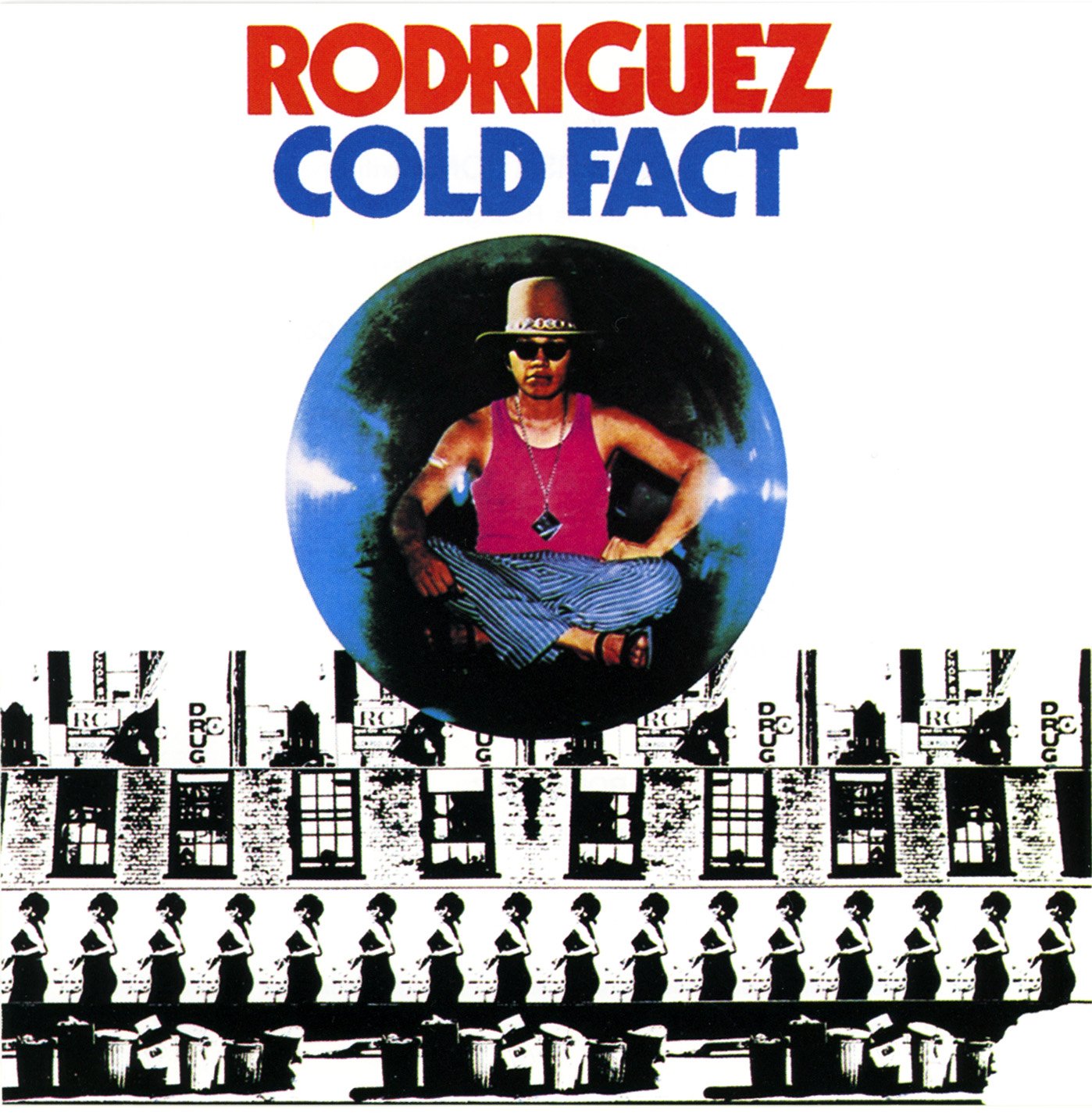
Born in Detroit, Michigan, the son of Mexican immigrant, working-class parents, Sixto Rodriguez focused on themes within Cold Fact that confronted inner-city poverty, inequality and anti-establishment sentiment. Rodriguez was seeing first-hand the struggles his community faced around him and felt compelled to write about them. Life was delivering cold facts, and the lyrics would follow suit. With Cold Fact came hard-hitting city truths and honest, street-poet storytelling.
“I'm a musical political, I tend to stick to what I see happening outside my front door.”
— Sixto Rodriguez
It was wild to us in Australia when we eventually found out about the enigma and the story surrounding the album's less-than-desired early reception. Because for those of us who had stumbled across the record, this album was 'essential' to the collection. Our parents passed on the music, and we Gen Xers chose what connected and landed right for our growing CD collections.
In fact, I didn't meet one Gen Xer whose parents had the record who didn't, in turn, buy the CD later in life as a young adult and give it a ‘good ole' burn at a party. When you heard it, it always started up a conversation along the lines of, “Oh yeah, your parents had this record too.”
It was a small cult amongst the grunge era, with the Boomers still echoing through the times.
Sometimes I wonder if Cold Fact didn’t receive the reception it deserved on release because perhaps the vibe had already been claimed by Bob Dylan — nine albums released throughout the 1960s, with another fourteen to come in the 1970s. Had the US already selected its messiah beatnik poet?
“I've only written 30 songs or something. Dylan's written over 500 songs. There's no comparison. He's the Shakespeare of rock 'n' roll and popular music.”
— Sixto Rodriguez
Cold Fact would go on to receive significant airplay in Australia, Botswana, New Zealand, Zimbabwe and South Africa. So much so that an Australian record label, Blue Goose Music, released a compilation album, At His Best, featuring previously unreleased recordings.
At His Best went platinum in South Africa. What happened next is almost mind-boggling.
Rumours had circulated that Rodriguez had died by suicide, and it wasn't until 1997, when Sixto's eldest daughter discovered a website dedicated to him, and the story was finally debunked. Sixto is alive!
A South African documentary, Dead Men Don't Tour, followed soon after in 1998.
“I think that many of the issues they were facing in South Africa were the same as those I was singing about. Conscription, resisting the draft, government repression — I mentioned all those things in my songs.”
— Sixto Rodriguez
Searching for Sugar Man
Much later, Sixto would be resurrected yet again, this time in 2012 at the Sundance Film Festival, through the documentary Searching for Sugar Man, directed by Swedish filmmaker Malik Bendjelloul.
The film would go on to win countless awards, including the Academy Award for Best Documentary Feature, and prompt a host of appearances in the US, now that Rodriguez had finally found the exposure that had eluded him in the early ‘70s.
Suddenly, people in the US and elsewhere wanted to know about this man who had been living a very quiet, elusive life back in Detroit. After the release of his two albums failed to deliver the financial success that might have allowed him a rock-star, Dylanesque lifestyle, Sixto Rodriguez simply slipped back into everyday normality. He worked in construction and, further down the line, even tried to land a job with the city council countless times unsuccessfully. All the while, his music was blowing up and creating a frenzy in South Africa.
I think this is why the story connects so strongly in current times. Rodriguez's story reveals a certain mystique and mystery — how a person's story, or persona can take on a life of its own, while an artist's work and its message can remain timeless.
I know for myself, as a young child, I was captivated by that album cover and intrigued by the cross-legged, floating gentleman in a hat. I didn't know who he was. I didn't know his story. But somehow, that was part of the allure.
The Factory, Sydney, Australia
I found myself back in Sydney in 2010, working a short stint across The Enmore, Metro and The Factory, all owned by the same business. Rodriguez was playing The Factory and, of course, I bumped my way onto that shift quick smart.
This was two years prior to the release of the documentary, so The Factory's punter limit was around 500 — a small, intimate show.
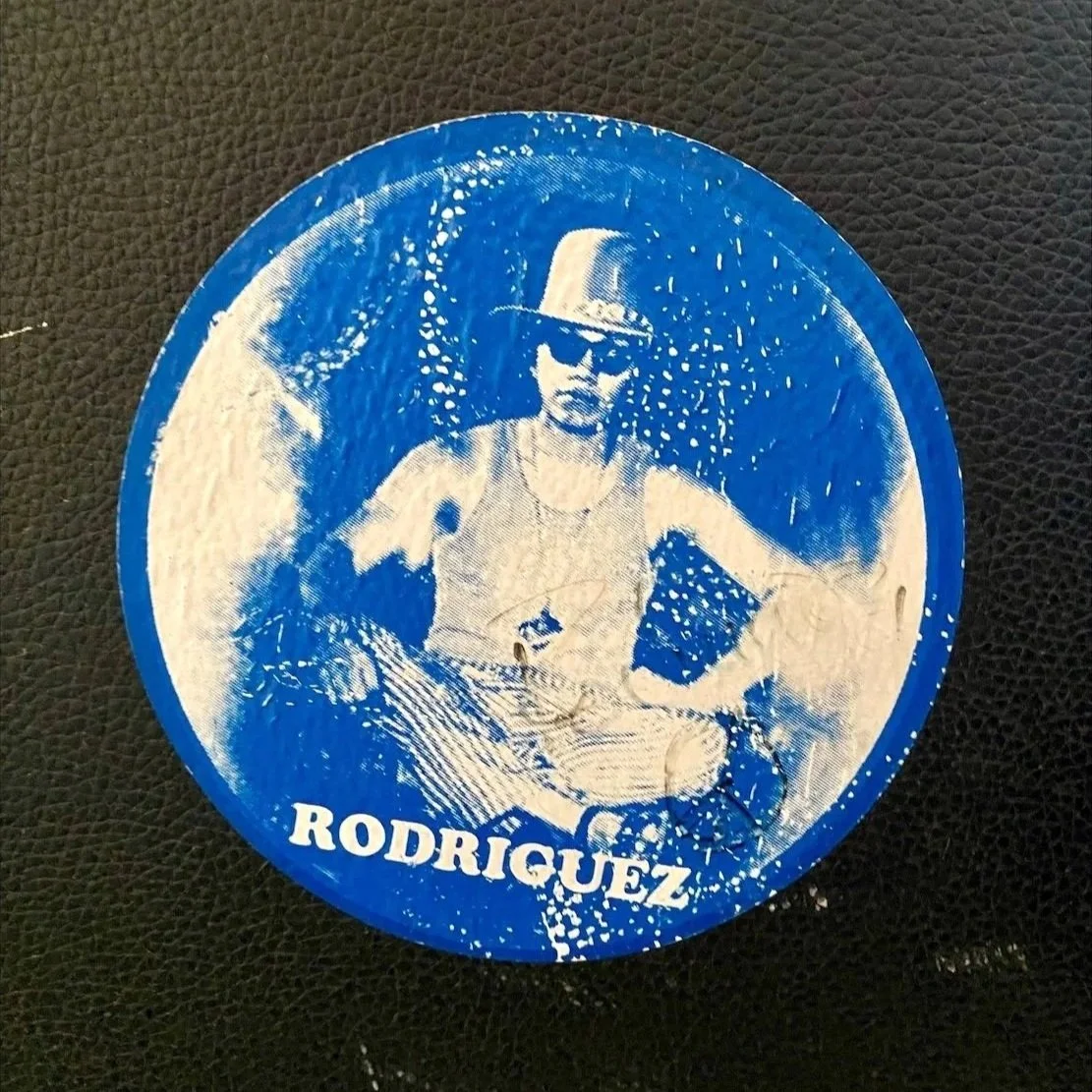
Rodriguez delivered a memorable set and even threw in Hallelujah. At the end of the gig, he was giving out signatures and I was able to get two signed stickers: one for myself and one for my parents. I still have mine on my Maton guitar case, although the signature has faded. You can slightly see the peace symbol, just.
I remember him being an absolute gentleman, waving women to the front of the line to be served first and being an all round gem.
(Click image to hear Inner City Blues)
Sixto Rodriguez passed away in 2023, and I can't help but wonder whether, looking back on it all, there would have been as much wonder and contemplation for him as there was for his fans, the serendipity of it all, and how the events of his life had unfolded in such an unusual way.
“I just want to be treated like an ordinary legend.”
— Sixto Rodriguez
Well, Sixto, your album is in my top 10! Somehow, some way it found its way into my childhood home as the back drop of many listening years.
Some further tracks to check out below:
Rodriguez - I think of you (not on Cold Fact)
Paolo Nutini and Sixto Rodriguez in Detroit (live) - Sugar Man
Paolo Nutini, Sugar Man cover (recording)