Sade: She’s Just a Smooth Operator
“I only make records when I feel I have something to say. I’m not interested in releasing music just for the sake of selling something. Sade is not a brand.” — Sade
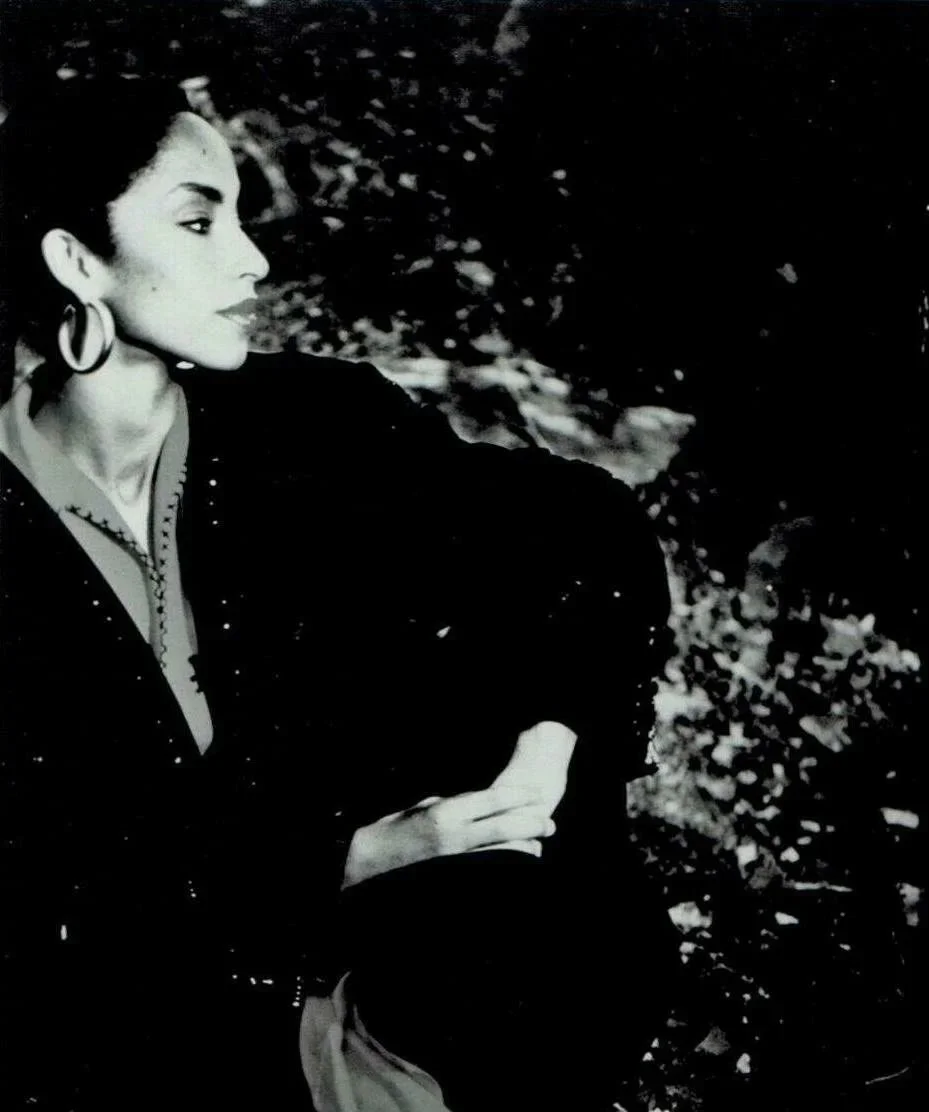
Sade Adu, 1986. Publicity photograph. Photographer unknown. Public domain, via Wikimedia Commons.
It always struck me hearing this statement by Sade regarding her approach to the expected timeline of creative output. She has a clear philosophy: she is only going to create when the urge and necessity provides a clear signal forward.
I admire the stamina it takes not to sway to the masses or industry expectations, but instead to treat creativity as a force to be respected and nourished—as we should nourish ourselves.
Helen Folasade Adu was born in 1959 in Ibadan, Nigeria, to a Nigerian father and English mother. After her parents separated, she relocated with her mother and brother to Essex, England.
Sade's aspirations weren't anchored in music from the beginning. In fact, music seems to have crossed her path almost accidentally.
She first studied fashion design at Saint Martin's School of Art in London, going on to make menswear and start a small clothing label with a friend, while modelling on the side. She later joined the band Pride as a backing singer after one of their singers left. It wasn't necessarily an obvious fit from the start, she was initially rejected before eventually securing the spot when the band struggled to find a replacement.
It was here that Sade began performing regularly and developing as a songwriter within a multi-sound group performing disco, funk and jazz. Eventually, she and several members of Pride began gravitating toward the ‘Sade sound’, largely because this was what the crowds were turning up for and what Epic Records saw potential in — a more focused, soul-inspired sound that would become unmistakably their own.
They spent two and half years performing the club circuit before their breakthrough album, Diamond Life, hit the airwaves in 1984. Those years of performing, refining and responding to what worked helped develop what can now sound almost effortless, that unmistakably smooth and consistent Sade sound.
But it wasn't only Sade's velvety vocals and honest songwriting that connected with listeners; it was the sophistication of the band as a whole. Sade began writing with saxophonist and guitarist Stuart Matthewman, continually refining their material and developing something distinctive that would be lasting and leave an impact on music to date.
That period of experimentation has laid the foundation for something Sade would become known for: songs that mean something without needing to overstate themselves.
Real-life stories that feel relatable. Songs that don't intrude on your space, but simply complement it.
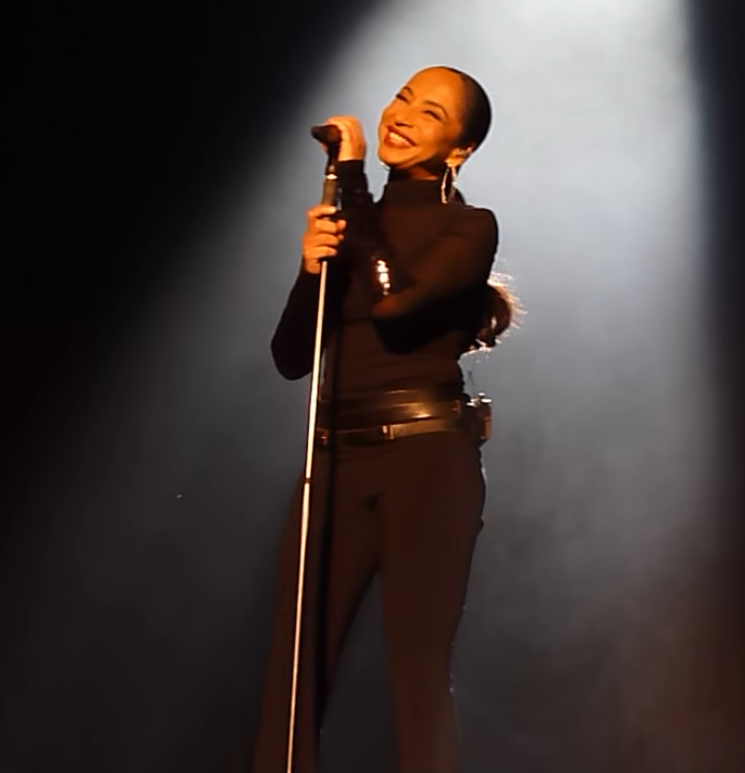
"You can only grow as an artist as long as you allow yourself the time to grow as a person." Sade
Sade performing in Chile, 2011. Photo: Ninoska Yévenes. CC BY 3.0, via Wikimedia Commons.
Sade followed Diamond Life (1984) with Promise (1985), Stronger Than Pride (1988), Love Deluxe (1992), Lovers Rock (2000) and Soldier of Love (2010).
After a productive entry and upswing throughout the '80s and early '90s came an eight-year hiatus before Lovers Rock in 2000, followed by another ten years before Soldier of Love in 2010. Now, 16 years since their last studio album, the space between releases seems to back the sentiment: don't force the expression until it is bubbling at the surface.
It is this sentiment that has stayed with me as an artist, as I have come to befriend life's downtime, which can often be necessary to transform lived experience into quality creative output.
We often feel pressured to always be generating output and adhering to a practice, like a cook who turns up every day to cook for patrons. While this consistency is a necessity for many professions, and a great way to earn a living, I don't believe creativity always works this way. There is no single defined approach, and often it takes great stamina to stand by your artistic process and define your own workflow.
Some artists write every day to keep the juices flowing, while others take time out to simply be a civilian—to live—and later regurgitate that lived experience into creative connection.
I like that Sade helps us understand that space and downtime can be just as important as uptime. That your way should be honoured.
Maybe knowing yourself deeply is underestimated. The key could very well be self-awareness: understanding your own creative process and developing the stamina to stand by it.
Sade only shared music when she felt it mattered, not when industry expectations turned on a tap and said, drip water.
Is it not the process itself that creates the opportunity for something greater to emerge—something with more depth, meaning and connection to the people we ultimately want to reach?
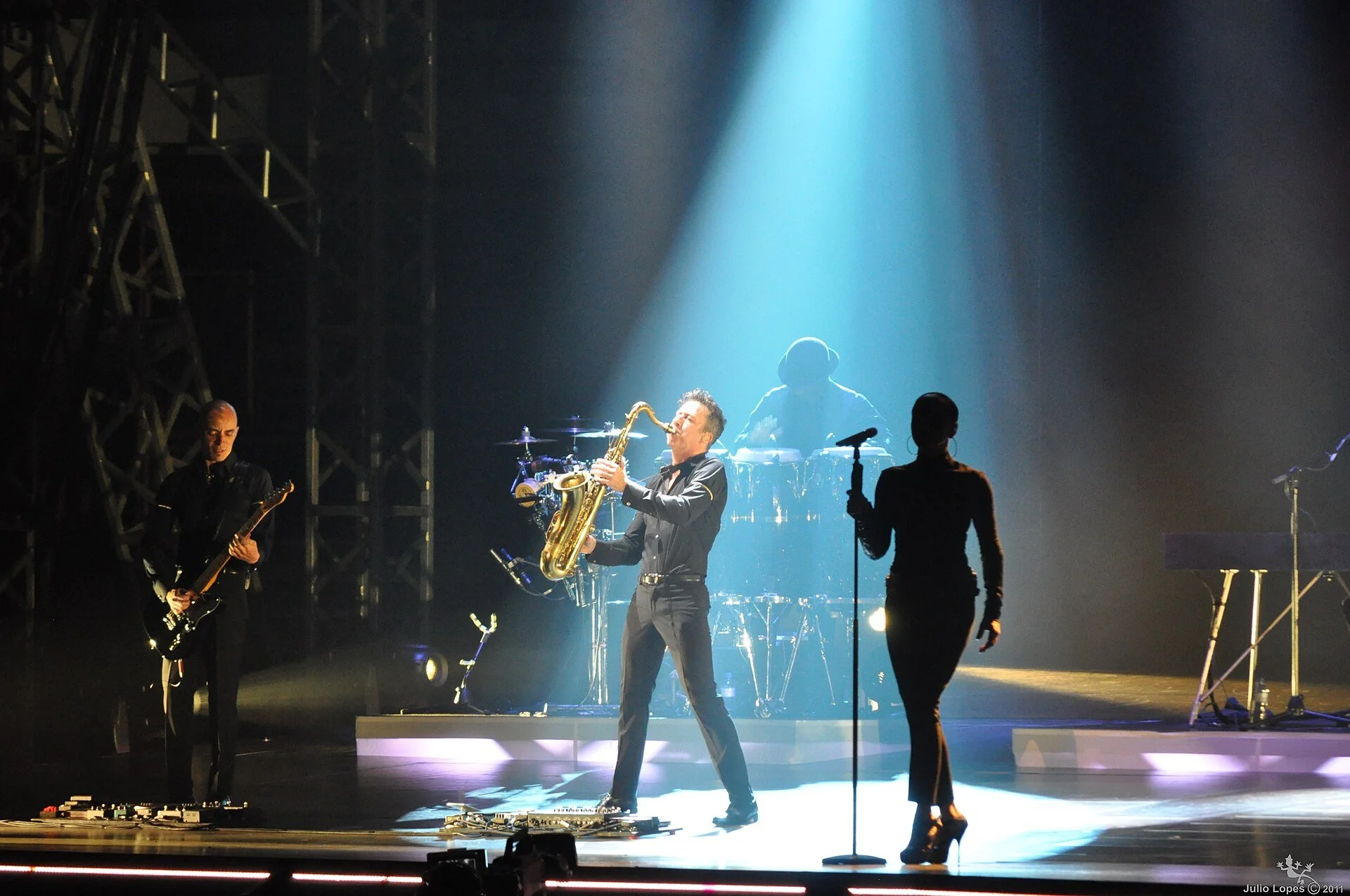
Sade performing in Brasília, October 2011. Photograph by Julio Lopes, licensed under CC BY 2.0, via Wikimedia Commons.
"If you're only making an album every ten years, it better be good." — Sade
Sade emphasises that life can be a muse in downtime and that you ultimately know when it is time to produce, or when you are pushing something premature that could potentially land flat. She has mentioned previously in an interview that artists can often feel scared to go away. To disappear for a while. She goes on to champion breaks as a way to help you realise why you do what you do and, perhaps more importantly, what you actually want to do.
That lingering fear is that there will be no place for you when you return. But in fact, your career and purpose never really switch off. The creativity doesn't run out. It quietly waits in the background until the floodgates start to rumble and eventually open.
There are plenty of other artists who appear to follow Sade's principle: be the fine wine, and only produce when the time is ripe.
Kate Bush — After The Red Shoes (1993), Bush waited 12 years before releasing Aerial in 2005.
D'Angelo — Voodoo arrived in 2000. Black Messiah didn't appear until 2014—14 years later.
Fiona Apple — The Idler Wheel... arrived in 2012, followed eight years later by Fetch the Bolt Cutters in 2020.
Adele — 19 (2008), 21 (2011), 25 (2015) and 30 (2021). As her career has progressed, the spaces between albums have grown with it.
Peter Gabriel — After releasing Up in 2002, Gabriel remained creatively active across other pursuits but didn't release another album of new material until i/o in 2023—21 years later.
Erica Badu’s— Last studio album, But You Caint Use My Phone, was released in 2015. Fast forward to today, eleven years later, and the bells have chimed, as Badu has announced a new collaboration with The Alchemist. Witch Doctor is the first single released and directed by Badu for this new collaboration’s much anticipated album release. Before The World Blows is set for digital release on the 28th August 2026.
Lauryn Hill — The Miseducation of Lauryn Hill, released in 1998, remains her only solo studio album outside of her work with the Fugees. It completely rejects the usual career trajectory expected after such an extraordinarily successful, Grammy-winning release. But perhaps the better question is: Can one album say everything that needs to be said? Can an artist hold their brilliance in one defining album? If this isn't an example, I don't know what is.
Update: In a recent BBC interview, Wyclef Jean of the Fugees was asked, “Will there be music in the future?”, with Lauryn Hill responding simply: “Absolutely.”
Maybe, 30 years later, we’ll be treated to new Fugees music once again.
With that said, I guess we'll just have to wait on Frank Ocean. His second studio album, Blonde, was released in August 2016, and with no album release since, he has well and truly joined the fine wine ranks of artistic expression.
These artists prove that absence doesn't necessarily diminish cultural value, it can actually preserve it.
Letting life feed the inspiration for authentic creative expression is an alternative pathway to constantly feeding the algorithm of expected output.
I now wonder how many bands produced when they weren't ready, or were forced to press the pedal when their work was still in its incubation phase.
The Beastie Boys notoriously pushed back against this kind of pressure with Sabotage. It was during the making of Ill Communication, producer Mario Caldato Jr. kept pushing the band to finish material while they were still working through it. That frustration ultimately fed into Sabotage, essentially a musical “get stuffed, thank you, I'll be right” response to being pushed before they were ready.
Maybe tension can produce brilliance. BUT the refinement stage should be respected.
Perhaps that is ultimately what Sade's career reminds us: creativity doesn't always arrive according to schedule. Sometimes the most productive thing an artist can do is live, observe, absorb and wait until there is genuinely something worth saying.
Intuitive Art as Medicine eCourse. It’s free!
A space for experimentation and intuitive processing.
Whether you are starting out or refining your artistic process, this course may offer subtle insights that help you better understand and define your unique creative process.