Patti Smith: Unbridled Freedom
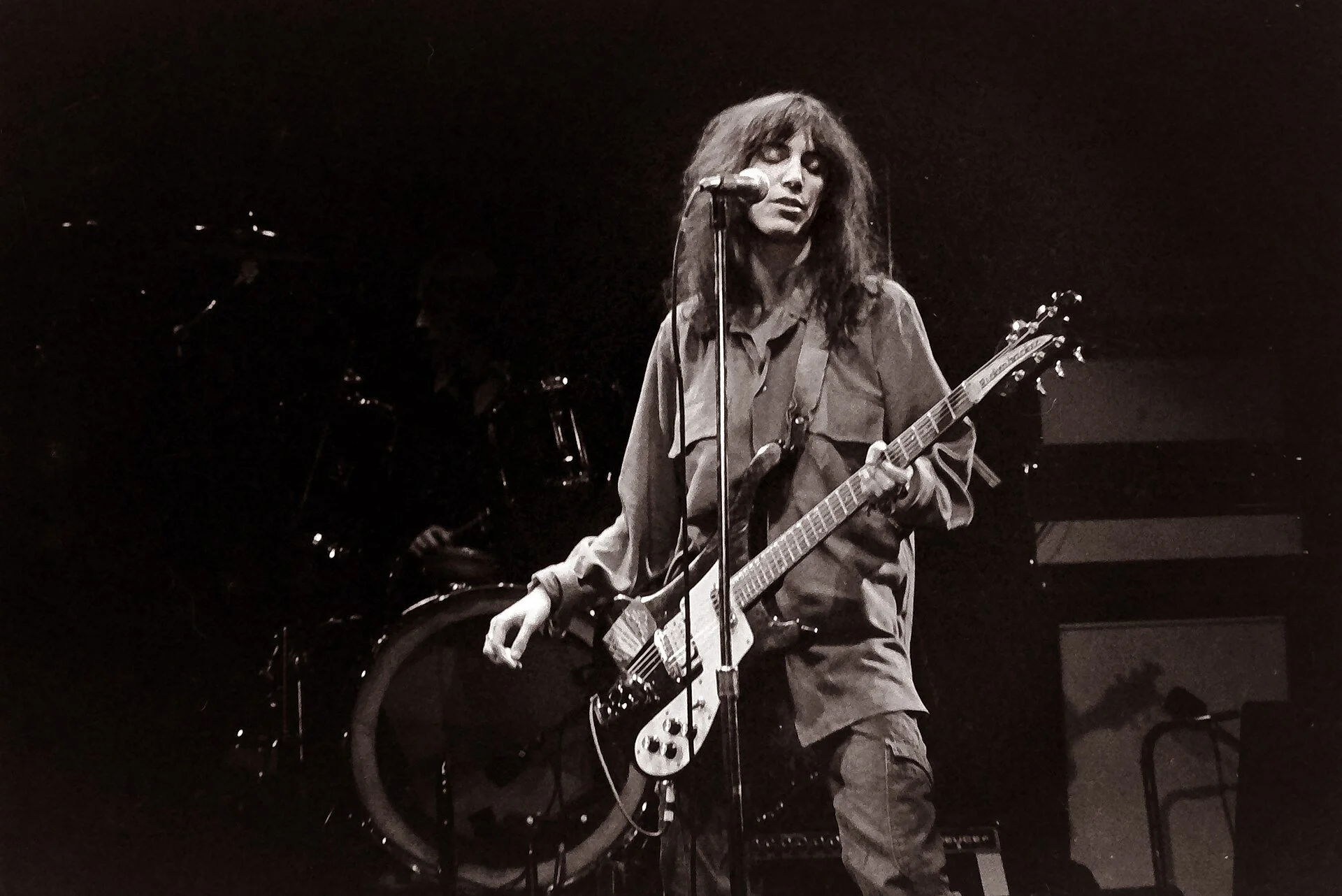
Patti Smith performing at Rockpalast, Essen, Germany, 21 April 1979. Photograph by Bodow, via Wikimedia Commons. Licensed under CC BY-SA 4.0. View original image and licence.
Where Imagination Takes Flight
Patti Smith grew up with a love of books, and was encouraged by her mother from an early age to read, which in turn inspired her expansive imagination. At 12 years old, Patti recalls in her memoir Just Kids how the family were taken on their first trip to the, Philadelphia Museum of Art. It was here Patti was met by the great halls of art, including Pablo Picasso’s harlequins to Cubist works. Patti reflects, “His brutal confidence took my breath away.”
I also found myself standing close up to Picasso’s works at the Picasso Museum in Barcelona. After countless museums, churches and art galleries, from Tate Modern to the Guggenheims in Venice and Bilbao, it was Picasso’s work that left me perplexed and overwhelmed by the magnitude of it all. Luckily for me, I still had six weeks of travel through Europe to unpack and process my encounter with the beloved Picasso.
After her family’s museum trip, Patti didn’t understand specifically what she was going to do, but she knew she was going to do that. This encounter planted a deep curiosity within the young girl’s hungry heart.
At 14, Patti won a competition run by the Sherwin-Williams paint store, with her work displayed in the local shop window. Amongst this small win in her hometown, Patti was dabbling, exploring and creatively adventuring, with a book never too far away.
Fate
Growing tired of the mundane churn of a minimum wage factory job, Patti had her sights set on leaving New Jersey. Luckily for her, fate would intervene more than once. The hustle and bustle of New York City, an artistic hotspot in the early '60s, was calling.
Recently laid off from her factory job, Patti took this as a sign to say her tearful goodbyes to all she knew and set off on the bus trip to NYC. Only the fare had almost doubled, and Patti didn’t have enough money to cover the full cost. Yet fate would meet her once again, ensuring the bright lights of NYC would be seen through Patti’s eyes.
Making her way to a telephone booth, Patti noticed a white purse resting on top of a telephone book. Inside was enough money to cover the difference in her fare, allowing her to continue towards her next destination. With her Arthur Rimbaud’s Illuminations book for comfort, Patti took it as a stroke of luck, gave thanks, and eventually made her way to Brooklyn, New York City.
Blue Star
Patti experienced all the struggles that came with moving to a new, larger-than-life city: finding and keeping down multiple jobs, making enough money to eat, pay rent and navigate all that surfaces when integrating somewhere new. However, a chance meeting would bring her into the orbit of Robert Mapplethorpe, a determined artist who would later be recognised as a photographer in his own right.
The two would come to see themselves as each other’s Blue Star, an anchor to their shared destiny, developing a deep, binding relationship that would support them through the trials and tribulations of making it as artists. When Patti questioned her art and her purpose, Robert was never far away to challenge the absurdity of the question and remind Patti of the possibilities that lay ahead, as they continued to nurture their creative path together.
Patti, during this vibrant period of New York’s late '60s art scene, would find herself crossing paths with the who’s who of rock ’n’ roll, including Janis Joplin, Jimi Hendrix, Lou Reed, as well as the city’s avant-garde artistic circles. Among the figures who would leave a lasting impression was Australian artist Vali Myers, whose fierce independence and unconventional life had captured Patti’s imagination long before they met at the Chelsea Hotel. One pivotal encounter would be a concert at the Fillmore Auditorium, 1968, where Robert was working as an usher. Robert gave Patti a free pass to see The Doors. It would plant the first seed of what rock ’n’ roll and poetry could become as a blended force of expression.
Kinship
Patti watched The Doors, and particularly their frontman, Jim Morrison, deliver with poetic confidence and theatrical flair, yet with an undercurrent of self-consciousness.
Patti felt a likeness, a kinship, and thought, I can do that.
Something opened up. Call it a kind of naïve transference, innocence wrapped in desire, or perhaps a moment that planted the seed of what I’ve come to think of as Unbridled Freedom.
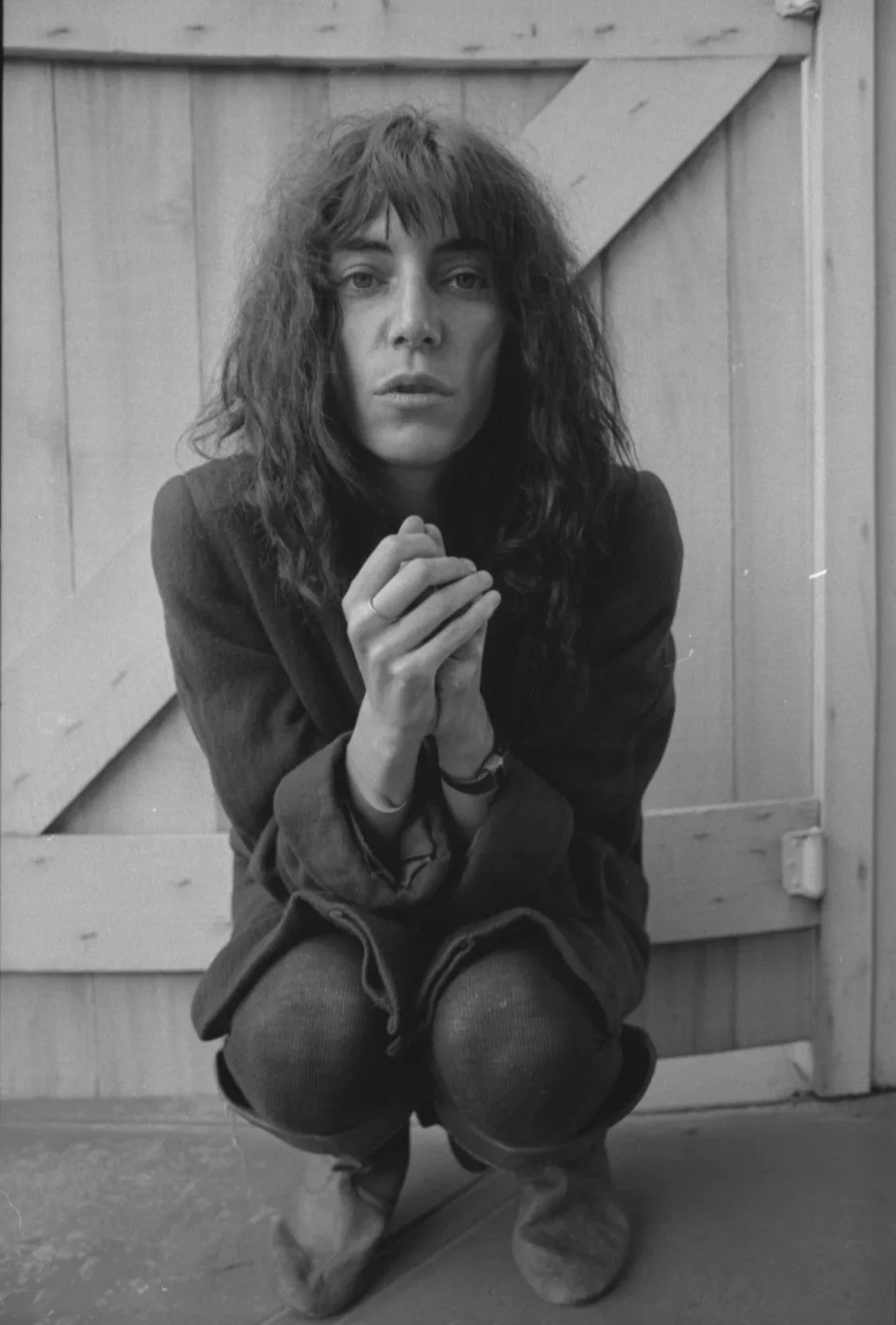
Patti Smith, 1978. Photograph by UCLA Library Special Collections, via Wikimedia Commons, licensed under CC BY 2.0.
These little nods of likemindedness, alongside Picasso’s Guernica at the Museum of Modern Art, would become a safe haven and a compass, revealing what a creative act could offer in the face of harrowing injustice. With her Blue Star, Robert, to lean on, they could tend to their shared struggles and plights, finding in their creative bond the strength to move mountains, if not dismantle them.
Inner Knowing
Sure enough, Robert kept his word in supporting Patti’s poetry and organised a reading for her at The Poetry Project, opening for Gerard Malanga. The response was remarkable, with a notable calibre of the artistic who’s who in attendance, including Andy Warhol himself. Offers followed, including a poetry feature in Creem magazine and a possible record contract with Steve Paul’s Blue Sky Records. Patti turned the contract down.
Perhaps this was an early lesson in trusting her own instincts. Despite the recognition and good fortune, Patti sensed this wasn’t her entry point into making a mark, at least not yet.
There’s something to be said for trusting that inner feeling of not my time. Sometimes, turning down an opportunity can leave room for a completely different set of events, possibilities and timelines to unfold.
Continuing to perform and refine her stage performance chops, Patti began securing opening slots for the New York Dolls and, eventually, with her backing band, building her own underground notoriety. Punk was circulating, and Patti was sliding right on in.
Art Has Spoken
“If your called and you want to come, be ready to work and sacrifice.” — Patti Smith
Land: Horses (1975)
Clive Davis would go on to scout Patti and her band with Arista Records. The album ‘Horses’ would be produced by band member, John Cale from The Velvet Underground at Electric Lady Studios. Of course, the album cover photograph would be taken by Robert Mapplethorpe.
Patti would later reflect on the album’s style, describing it as a blend of “three-chord rock with the power of the word.”
Dancing Barefoot (1979)
After Horses, Patti would continue to make her mark, earning her place as the Godmother of Punk. Her albums would go on to include Radio Ethiopia (1976), Easter (1978), Wave (1979), Dream of Life (1988), Gone Again (1996), Peace and Noise (1997), Gung Ho (2000), Trampin’ (2004), Twelve (2007) and Banga (2012).
We can see in Wave how Patti explores through “Dancing Barefoot”, an introspective, sensual, feminine and transcendent experience. Carried by an inner current, the heroine becomes the subject of her own experience.
People Have The Power (1988)
Was written by Patti Smith and her late husband, Fred “Sonic” Smith.
“One does their work for the people and the more people you can touch the more wonderful it is.”
— Patti Smith
Sacred Wounds of Grief
Patti’s life would bring unimaginable loss. Her Blue Star, Robert Mapplethorpe, died in 1989, aged 42. Five years later, she would lose her husband, Fred “Sonic” Smith, in 1994. These losses would become part of the landscape through which she continued to live, create and understand her world.
"People should not feel that it’s wrong to feel joy in the centre of grief. We have to be able to go through the whole spectrum, it’s a part of being alive. We have to find a balance for all of that. If you’re muting one part of yourself, it's gonna also mute somewhat of the other. It's important to feel everything. To feel guilt, to feel anger, it's important to know what all these things taste like.” — Patti Smith (with Anderson Cooper, on the ‘sacred wounds’ of grief)
Perhaps this, too, is part of Unbridled Freedom, not closing ourselves off to pain, but remaining open to life in all its complexity.
Illuminations Along the Way

Please, no matter how we advance technologically, please don’t abandon the book. There is nothing in our material world more beautiful, than the book.
— Patti Smith
Patti Smith at the 81st Venice International Film Festival, 2024. Photograph by Harald Krichel. Via Wikimedia Commons. Licensed under CC BY-SA 4.0. View original image and licence.
Patti Smith’s story shows how a young girl, filled with dreams and an imagination nurtured by books, poetry, kindred spirits and unbreakable bonds, could draw strength from these connections to navigate some of life’s hardest challenges.
Through love, loss and a lifelong devotion to her creative calling, Patti remained true to a path she could never have fully mapped out. Perhaps that is the beauty of it. She didn’t need to know exactly where the road would lead. She simply had to keep walking it, remaining open to like-minded souls who recognised her desires and dreams, and to the experiences and possibilities that would reveal themselves along the way.
Amongst many accolades, Patti was inducted into the Rock N Roll Hall of Fame in 2007, and recognised for the 2026 Princess of Asturias Award for The Arts.
You can keep up with Patti Smith’s projects, books, music and latest news, including the early adventures of Patti and Robert Mapplethorpe in Just Kids here.