Part One
When I think of Coltrane, I'm taken all the way back to such a lovely memory of when I was 28 years old, living in Melbourne, Australia, and focused on improving my artistic practice in painting. Amongst all the experimentation, studies and learning guitar, I recall hanging out with a musician friend at the time who, during one of our deep-dive musical chats, asked, “Have you heard of Coltrane?”
I said, “No, I haven't.” Just to clarify, whilst my parents had a robust record collection, there wasn't any jazz in it, mostly rock 'n' roll and blues, so I was extremely new to this genre of music. I didn't have any jazz CDs in my personal collection, nada. Well, I would soon find out that was about to change.
My friend, seemingly sympathising with my musical fate to date, said, “I've got a CD. You can have it.” With absolute certainty in his eyes, he said with conviction, “This will absolutely elevate your art, Leesa, and completely expand your possibilities of what's creatively out there. When I say you need to listen to Coltrane, I really mean it. Really listen.” As he handed me My Favorite Things by John Coltrane, I thought, “Wow, this CD really means a lot to this guy for some reason.” Then I had a little flash of recognition: “Wait a minute, I've been here before. Flashback incoming…”
As the CD was placed in my hands, I was transported back to 1998 in Newcastle, NSW, when another musician, who also taught yoga at the time, had asked me if I had a mantra. I explained that I was attending weekly yoga classes, but back then the classes were taught without music (not uncommon), and we would finish with three chants of OM. So I had OM, but that was about it. “No problem,” he said. “I've got a CD in my bag. You can have it. Take it as a gift.” He rummaged through his shoulder bag and handed me a CD of the Om Namah Shivaya mantra chant. I was incredibly grateful for the gift and excited for this new mantra he had just filled me in on.
I knew, deep down, that these two exchanges carried a similar significance, each offering wisdom to share. As a willing student, I simply listened with intent.
I chanted Om Namah Shivaya and later in Melbourne began listening to Coltrane's CD while painting, grateful for these serendipitous exchanges that crossed my path. As a result, my yoga and mantra practice expanded, and the colours in my artwork seemed to become brighter, more elevated, taking me on a creative journey into unknown places. It instigated a spaciousness that opened up the landscape for whatever might come through.
My musician friend did say my artistic practice would improve, and he didn't tell a lie. My art would most certainly be transmuted in some way by…
John Coltrane
"With its pure tone and textural sounds wavering like a butterfly's wing in motion, the song's melodic colours wash over you, offering a clarifying refresh for the nervous system." — Leesa Maree
Classic Quartet : John Coltrane, McCoy Tyner, Steve Davis, Elvin Jones
Jazz Saxophonist | Composer | Bandleader | Master Teacher
Born: Hamlet, North Carolina (1926 - 1967)
Genres: Jazz, hard bop, spiritual jazz, post-bop, modal jazz,
avant-garde jazz, free jazz
“My music is the spiritual expression of what I am — my faith, my knowledge, my being. When you begin to see the possibilities of music, you desire to do something really good for people, to help humanity free itself from its hangups. I think music can make the world better and, if I'm qualified, I want to do it. I'd like to point out to people the divine in a musical language that transcends words. I want to speak to their souls.” — John Coltrane
(Interview with Paul D. Zimmerman, Newsweek, 1966.)
Early Rising Trane
In his early years, John picked up clarinet and E-flat alto horn, playing with the local community band. But life would soon present a succession of devastating losses. Within a few months, his father, grandparents and aunt would all pass away. One can only imagine the impact this would have had on a young teenager, as his family grieved and their home life was transformed by the magnitude of these unexpected losses.
The Coltrane family would eventually relocate to Philadelphia. It was here that John found work, and his mother gifted him his first alto saxophone. He briefly attended the Ornstein School of Music and Granoff Studios, while immersing himself in the local music scene. His first major musical epiphany came in 1945, when he witnessed the greats Charlie Parker and Dizzy Gillespie performing in Philadelphia.
"The first time I heard Bird play, it hit me right between the eyes." — John Coltrane, DownBeat, 1960
After completing his US Navy service in Hawaii, where he played clarinet and alto saxophone with the Melody Masters, Coltrane returned to Philadelphia in August 1946. He was met with a bustling jazz scene, rich with opportunities to learn, perform and develop his musicianship. Immersing himself in this thriving community, he continued his studies, eventually switching from alto to tenor saxophone in 1947.
Coltrane further developed his understanding of music theory and harmony with mentor Dennis Sandole. He also found himself exchanging ideas with fellow Philadelphian pianist, composer and theorist Hasaan Ibn Ali. Their musical explorations, alongside the wider circle of musicians in the city, would help expand his harmonic thinking.
If you could keep up with the bebop, then this Philly community wanted to hear your chops!
At the backbone of this whirlwind of rapid chord progressions, extended harmonies and melodic improvisations was Jimmy Heath's (Little Bird) parents' house. They were amateur musicians who loved jazz, so, in true Philly fashion, they opened their home to the community to jam, exchange ideas and build the stamina required for this fast-paced playing and long hour solos. Jimmy’s mother, Arlethia, and the mother of trumpeter Johnny Coles were known to serve up sandwiches and Kool-Aid, so the musicians were in good company.
Greats passing through the house were Charlie Parker, Dizzy Gillespie, Miles Davis, alongside the up and coming eager to master the art form John Coltrane himself, Benny Golson and the Heath brothers — Percy, Jimmy and Albert "Tootie".
Coltrane practiced almost to the point of obsession, inspired, and welcomed by this community of players. Jimmy Heath famously joked that he practised 25 hours a day. One thing was for sure: his determination, focus and tenacity in striving for greatness were taking root, and the Trane was moving.
Road To Awakening: Mapping the Maze
Coltrane was now finding his feet among the musicians he had once admired, playing occasionally with Charlie Parker and getting his first major break with Dizzy Gillespie's big band, initially playing alto saxophone before moving to tenor and joining Dizzy's smaller sextet. It was during this period, in Detroit, that Coltrane would form a long-standing friendship with Yusef Lateef, exchanging ideas and playing together during after hours jam sessions at the West Inn Hotel.
Things were going well until they weren't going well. Coltrane had developed a drug addiction and struggled to kick the habit. With his addiction conflicting with his band duties, Dizzy had to let Coltrane go. Coltrane tried to sort things out and a few years later, Miles Davis, who had experienced his own struggles with addiction, invited him to join his First Great Quintet. He saw enormous potential in the young Coltrane.
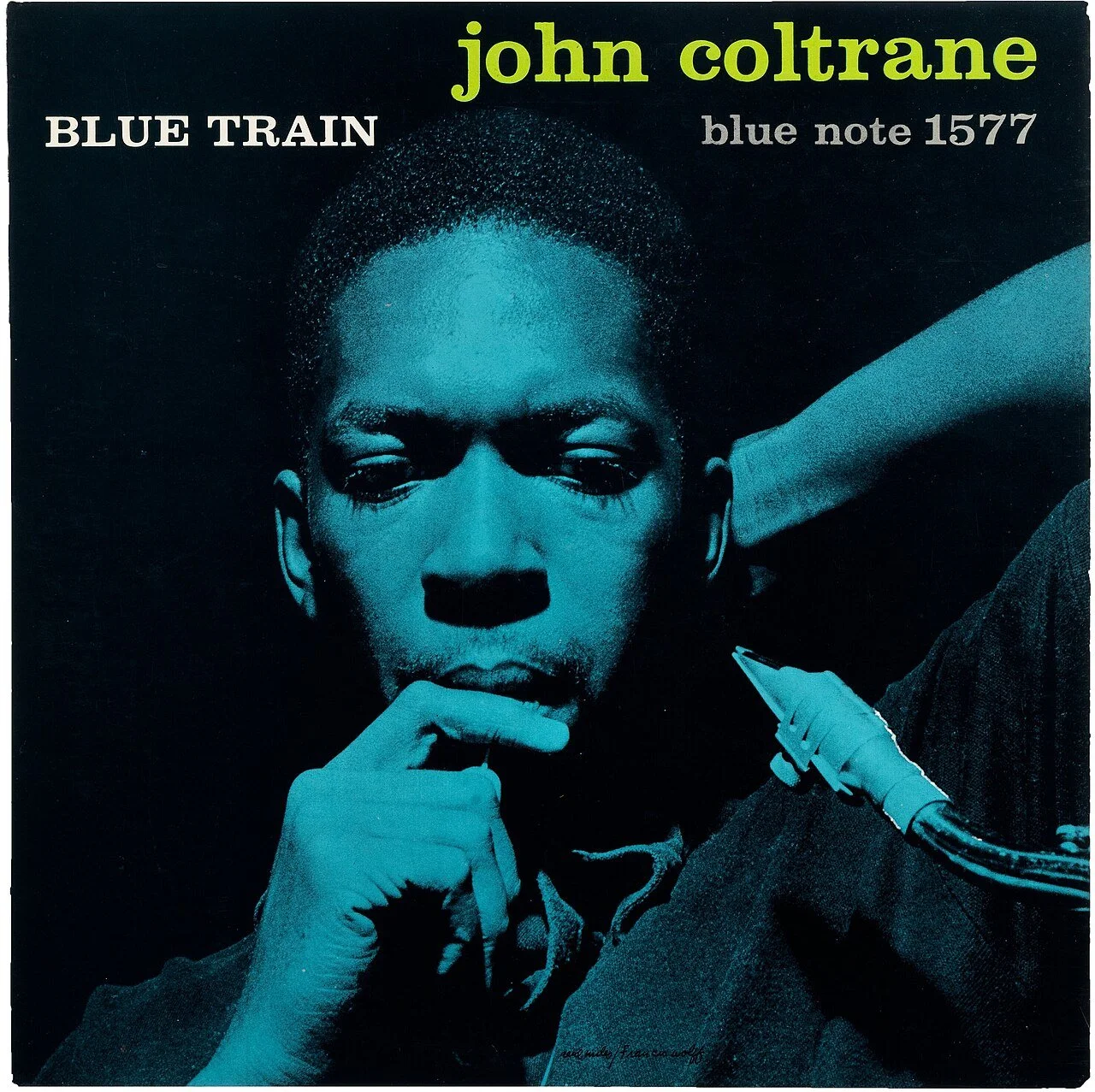
Line-up: John Coltrane, Lee Morgan, Curtis Fuller, Kenny Drew, Paul Chambers, Philly Joe Jones
Initially, there was a hesitant reception. Davis's cool, restrained playing style contrasted with Coltrane's more searching, expansive approach. However, the contrast between the two proved to be a powerful combination, delivering the classic Prestige albums Cookin', Relaxin', Workin' and Steamin'.
Unfortunately, Coltrane's addiction reared its ugly head again. As a result, Miles dismissed him in 1956, briefly took him back, and then officially let him go in April 1957.
Eager to get back on track, Coltrane headed home to Philadelphia and locked himself in his room to go cold turkey. He later described a profound spiritual awakening during this gruelling period of recovery, an experience that freed him from the bonds of heroin addiction, once and for all. He would go on to speak of this transformation in the liner notes accompanying A Love Supreme.
It was now time to get back to work, and work Coltrane did. He joined Thelonious Monk's quartet for a legendary residency at the Five Spot Café in New York. He also proceeded to record the hard bop masterpiece Blue Train (recorded in 1957, released in 1958) at Rudy Van Gelder's parents' home in Hackensack, New Jersey. It marked one of Coltrane's first great achievements as a composer and bandleader, helping to establish his own musical identity. Rudy an optometrist by day and a budding recording engineer by night, would transform his parents' living room into a recording studio. Equipped with German made Neumann microphones, including the renowned U47, Rudy would attract some of the biggest names in jazz history to his home studio.
The likes of Miles Davis, Thelonious Monk, and John Coltrane would all set up and record iconic albums and Rudy was happy to be a part of this highly charged community.
And I guess, just quietly, amongst all the happenings at the time, the Trane kept rolling, delivering another piece of magic Soultrane and a little sprinkle of Stardust.
Coltrane was back, and Miles Davis was keen to rehire him. Returning to the quintet in 1957, Coltrane would go on to record on Miles's Milestones (1958), which included the title track's important exploration of modal jazz. Miles was creating more space for melodic exploration through sustained modal structures, rather than the rapid chord changes characteristic of bebop. This approach would be further developed in the landmark follow up Kind of Blue (1959).
Sheets of Sound: Giant Steps
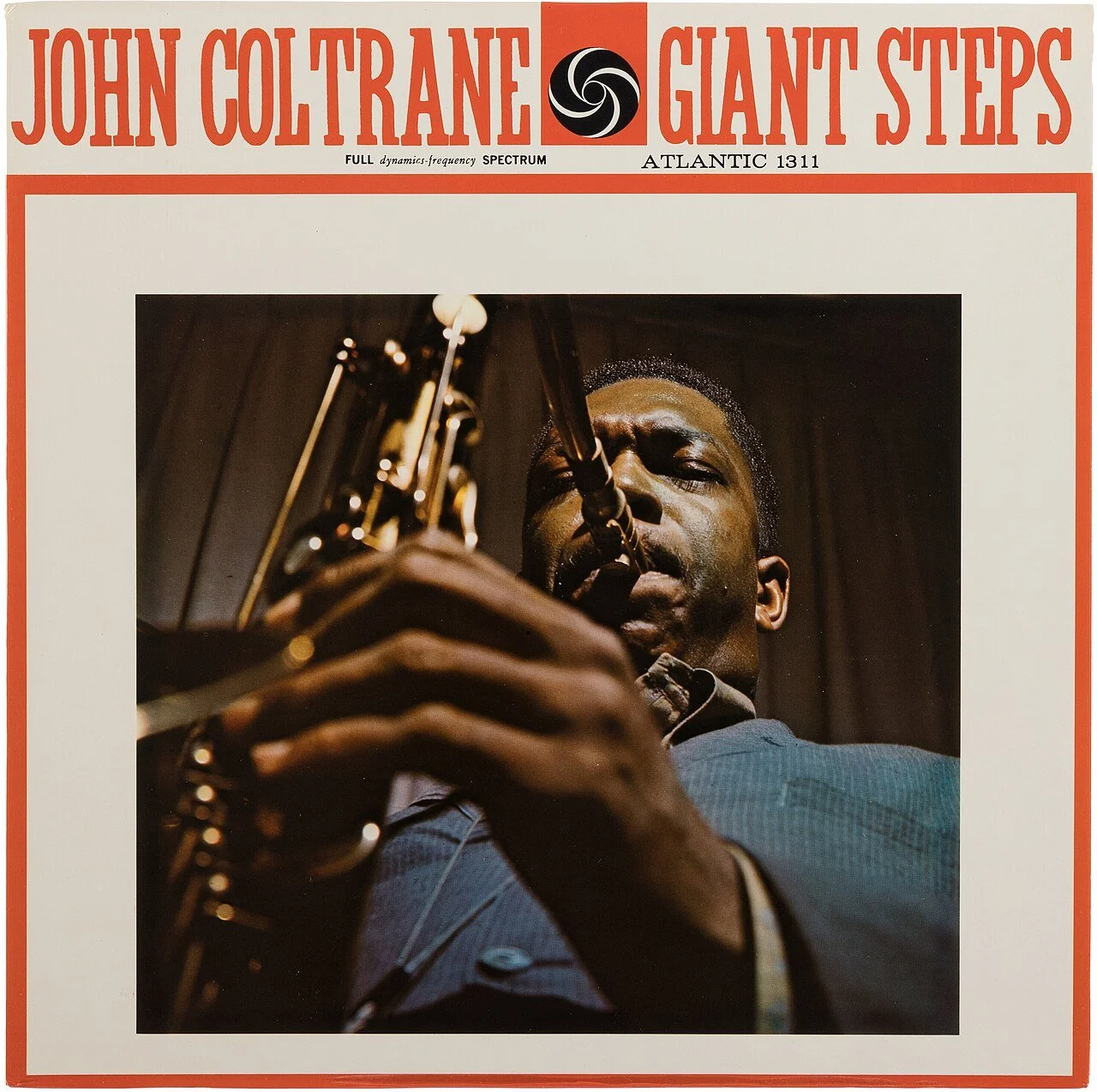
Line-Up: John Coltrane, Tommy Flanagan, Paul Chambers, Art Taylor
Having explored the modal tracks introduced by Miles Davis, Coltrane returned to the studio as a bandleader to record Giant Steps (recorded 1959, released 1960), contrasting its fast-paced chord changes with the hard bop of Coltrane Jazz, which he was working on simultaneously and which featured the delightful “Fifth House” for good measure.
In the recording of “Giant Steps”, eager to push the mathematical mapping of harmony to its extreme, he headed in an almost opposite direction to what Miles Davis had been exploring on Milestones and Kind of Blue. Coltrane accomplished a technical victory in his own right. He was now recognised for his fast-playing sprints through shifting chords known as the ‘Coltrane Changes’, proving he could navigate even the most difficult of harmonic mazes. But having achieved this extraordinary feat, where was there left to go?
If you have pushed vertically to the absolute heights of Mount Everest, then what?
While carving out his own playing style among the giants of jazz, Coltrane's next steps would increasingly explore a different direction. Perhaps he had already offered a hint of what was to come with the delicate “Naima”, a composition that allowed more room for sustained harmony and melodic expression.
A new direction was calling. It was time to go horizontal and take the Trane deeper into modal jazz.
Beyond The Vertical: Painting Texturally
With his technical mastery and a growing desire to explore greater harmonic freedom, Coltrane headed back into none other than Rudy Van Gelder's new studio in Englewood Cliffs, New Jersey to record My Favorite Things (1960). Extending his modal exploration through his interpretation of the Rodgers and Hammerstein waltz, he would this time leave his imprint on the soprano saxophone, gifted to him by Miles Davis.
“I was going with a girl who was an antique dealer in France. She gave this soprano sax to me and I gave it to Coltrane. I gave that thing to Trane, man, and it's probably still in his hand. He probably died with it in his mouth! He never did take that thing out of his mouth.” Miles Davis, 1985, Richard Cook NME interview.
Ahmad Jamal mentions in DownBeat (2023): “My Favourite Things is how you know John Coltrane,” he said. “But why did John Coltrane pick that? Because he found something in there that no one else did.”
Ahmel would do the same with his delicately smooth and languid rendition of Bing Crosby’s Poinciana.
At this time, Coltrane was still hungry to explore the vast scope of creative possibilities available and began informal lessons to trade ideas with John Gilmore in the late ‘50s, who was known for his tenure with avant-garde bandleader Sun Ra.
The community was tight, incredibly vibrant, amidst a flourishing creative period of the early '60s, and Coltrane would ride right through it with his friend Eric Dolphy by his side. Recording in May, 1961, Africa/Brass featured layered brass arrangements and African-influenced rhythms marking an exciting expansion of Coltrane's musical landscape.
In the same month, Olé Coltrane continued this exploration of world musical influences, incorporating Spanish and Andalusian/Moorish musical colours to further add to the palette.
Line-up: Eric Dolphy, Freddie Hubbard, Art Davis, Reggie Workman and others
The inclusion of two double bassists on Olé Coltrane created greater contrast, tension, drama and rhythmic depth, widening the soundscape and providing Coltrane's saxophone further room to fly. Then Dolphy enters, bringing further tension and intrigue as the rhythm section anchors the piece. Add McCoy Tyner's piano to the mix, and the result is an extraordinary interplay of musicians, each pushing against and responding to the other.
However, Coltrane and Dolphy's increasingly exploratory music attracted considerable criticism. You can read their discussion about the 'anti-jazz' comment made by critic John Tynan here, on page 19: Down Beat, 1962.
Coltrane would go on to perform and record, Live at the Village Vanguard in 1961, and would capture Coltrane pushing improvisation into more expansive and exploratory territory. Influenced by Indian ragas, modal jazz and free jazz, we can hear in the track ‘Chasin’ the Trane’ moving away from traditional bebop and would give a nod to John Gilmore, whose adventurous playing had inspired Coltrane early in his musical evolution. This exploration would continue with Impressions (1963), where modal structures and extended improvisations allowed Coltrane and his quartet to push further into musical freedom.
Crescent
Recorded for Crescent (1964), ‘Lonnie's Lament’ and ‘Wise One’ reveal a more emotionally reflective side of Coltrane, showcasing his imaginative depth and ability to express a broad landscape of musical colours. This album would feature the line-up of what became known as the John Coltrane's Classic Quartet.
You can sense now the enormity of sound explored between 1959 and 1965, moving from Giant Steps, My Favorite Things, Coltrane Jazz, Live at the Village Vanguard through Crescent, Africa/ Brass, Olé Coltrane, Transitions , A Love Supreme and more. So many sounds, and so many of these musicians performing alongside one another. It reflects the creative melting pot of the early '60s and the growing need for artistic exploration amidst a time of social upheaval.
In ‘Lonnie's Lament’, we could say Coltrane offers a peaceful place to rest and seek comfort.
A Love Supreme: Song As Prayer
Recorded at the end of 1964 and released in 1965, A Love Supreme would mark Coltrane's landmark recording, and a turning point in his continued exploration and connection to God. John Coltrane shares a four part story through sound: Acknowledgement, Resolution, Pursuance and Psalm. A meditative reflection that oscillates between momentum and subtlety, movement and stillness, searching and gratitude.
John Coltrane's Classic Quartet lineup is highlighted here:
John Coltrane — tenor saxophone, composer
McCoy Tyner — piano
Jimmy Garrison — bass
Elvin Jones — drums
Opening The Field
Pushing the boundaries of improvisation and expression, new players would join to stretch the already expansive Trane sound to new heights and new feelings. Working with Pharoah Sanders, Archie Shepp, Freddie Hubbard and Art Davis, alongside a group of accomplished musicians, Coltrane would create Ascension (1965), a collective sound driven by improvisational freedom and a desire for oneness.
This was the beginning of an extraordinary period of exploration, with Ascension, Om and Meditations forming what I like to think of as a trilogy of musical and spiritual expression. Powerful waves of sound come together to explore new landscapes and invite the listener on a journey, a journey of architectural freedom, a journey of the artist.
During this same period, Coltrane was also recording Kulu Sé Mama (released in 1967), an exploration incorporating layered percussion, chanting and African influenced rhythms. It would be the last studio album released during his lifetime.
During their friendship, Coltrane gifted Yusef Lateef a mandala drawing referred to as, Coltrane's Circle of Tones. Yusef would later include it in his book, Repository of Scales and Melodic Patterns here. You can learn more about the mandala drawing in this article by physicist and author, The Jazz of Physics , Stephon Alexander, here.
John Coltrane passed away in 1967, just months after completing the recording sessions for the posthumous release Expression, which featured his wife and fellow jazz musician Alice Coltrane on piano, alongside drummer Rashied Ali.
His passing would not mark the end of his musical journey. A wealth of recordings would continue to emerge posthumously, including Om, Interstellar Space, Sun Ship and Stellar Regions, offering further glimpses into the extraordinary imagination of John Coltrane. For the excited fan, you can now access the Tiberi Tapes released November 6th, 2026.
His recorded legacy reveals a musician who never settled on a single emotional signature, always searching for what came next. He remains an enduring innovator of jazz.
Much like a painter has a breadth of colours and hues to explore, Coltrane possessed an extraordinary emotional vocabulary. Through his expansive catalogue, he could reach the listener on many different levels, from technical wizardry to profound emotional subtlety, connecting deeply with them wherever they might find themselves.
Thank you for joining me on this deep dive into the incredible career and imagination of John Coltrane, and what would have been his 100th birthday.
I hope you'll join me for Part Two, as we explore the career of the extraordinary multi-instrumentalist, bandleader and spiritual teacher Alice Coltrane, and her important role as guardian of John Coltrane's musical legacy.
"The infinite influence of Maestro John Coltrane is to the level of Albert Einstein. He created a quantum leap in the frequency of sound-rhythm and light... His music has so much light; it's illuminating." — Carlos Santana
Part Two: Alice Coltrane