Piet Mondrian: capturing universal equilibrium through opposing forces.
Through the reduction of visual elements, Mondrian believed that a hidden universal harmony could be revealed, uncovering a universal truth of the highest order.
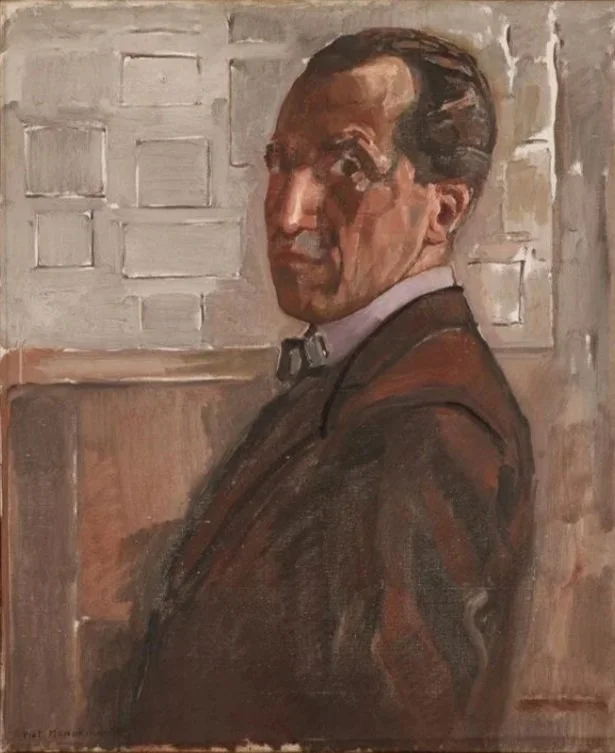
"The truly modern artist is aware of abstraction in an emotion of beauty”
Piet Mondrian, 7 March 1872 – 1 February 1944.
Image © Piet Mondrian, Self-portrait (1918), Kunstmuseum Den Haag. Public domain via Wikimedia Commons.
Artistic Growth
Born in the Netherlands in 1872, Piet Mondriaan began his artistic career much like many painters of his time, working within the traditions of representational painting. He studied at the Academy of Fine Arts in Amsterdam and was already a qualified drawing teacher. Beyond the studio, Mondriaan was also a writer and thinker, developing the artistic philosophy that would later become known as Neoplasticism.
His early works were influenced by contemporary movements such as Pointillism and Fauvism. However, Mondriaan's development was shaped not only by artistic trends but also by spiritual inquiry. In 1909, he joined the Dutch branch of the Theosophical Society, founded by Helena Petrovna Blavatsky. He was deeply influenced by Theosophy's search for universal truths and by the related spiritual ideas explored through Rudolf Steiner's Anthroposophy.
This growing spiritual interest would profoundly affect his artistic direction. Rather than simply depicting the visible world, Mondriaan sought to reveal the underlying structures and universal principles that existed beneath appearances. His paintings gradually evolved into explorations of balance, harmony, and the essential building blocks of visual reality.
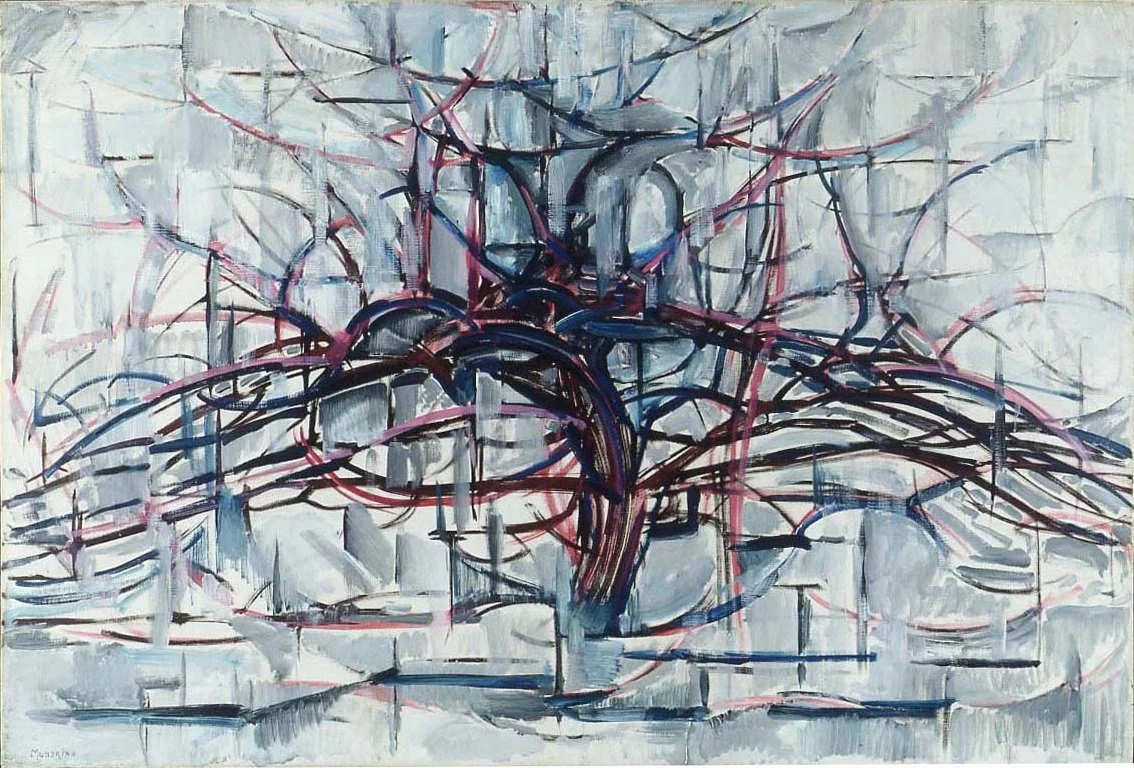
Piet Mondrian, Horizontal Tree, 1911.
Oil on canvas, 75.9 × 112.2 cm. Munson-Williams-Proctor Arts Institute, Utica, New York. Public domain image via Wikimedia Commons.
In 1912, Mondriaan moved to Paris and dropped the second "a" from his surname, becoming Piet Mondrian. This marked a significant new chapter in his artistic journey. Immersed in the avant-garde atmosphere of Paris, he encountered Cubism through the work of Pablo Picasso and Georges Braque. Cubism's fragmentation of form encouraged Mondrian to move further away from naturalistic representation and toward a visual language built from line, colour, and geometric structure.
This period laid the foundation for his contribution to twentieth-century abstract art. Rather than depicting objects as they appeared, Mondrian increasingly reduced his subjects to geometric shapes and interlocking planes, seeking their essential form.
When the First World War broke out in 1914, Mondrian was forced to remain in the Netherlands. Although separated from Paris, the experience had already transformed his artistic outlook. Freed from the expectations of traditional painting and driven by his spiritual hunger, he continued to refine his emerging visual language.
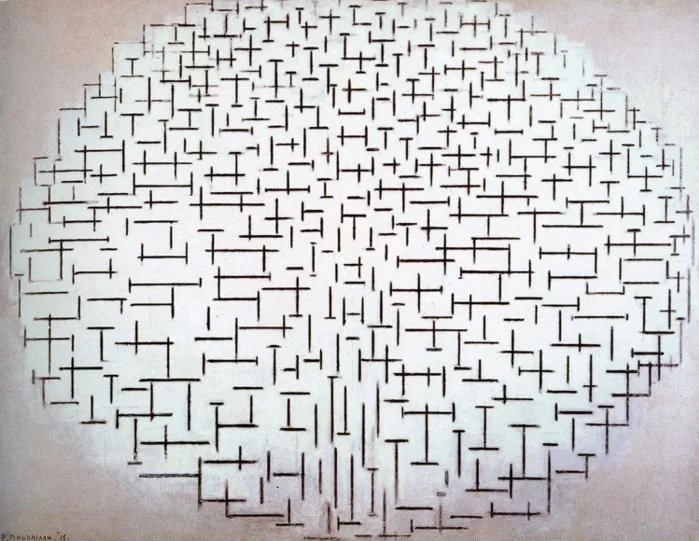
"Abstract art is not the creation of another reality but the true vision of reality.”
Piet Mondrian, Composition No. 10 (Pier and Ocean), 1915. Oil on canvas. Public domain via Wikimedia Commons.
During this period, Mondrian became associated with the artists' colony at Laren and developed an important friendship with Bart van der Leck. Their exchanges encouraged him to simplify his palette and focus increasingly on the primary colours of red, yellow, and blue. Works such as Composition No. IV, 1914, demonstrate this transition toward greater abstraction and formal reduction.
In 1917, together with Theo van Doesburg and other artists, Mondrian helped establish De Stijl ("The Style"), a journal dedicated to a new vision of art and design. Through its essays and publications, Mondrian articulated the principles of Neoplasticism, advocating an art based on straight lines, primary colours, and universal harmony.
“The emotion of beauty is always obscured by the appearance of the object. Therefore the object must be eliminated from the picture. ”
—Piet Mondrian
Neoplasticism Theory, seeking universal truths through balance, harmony and order
Over the next two decades, Mondrian's work evolved into a visual language stripped down to its essential elements. Following the end of World War I in 1918, he returned to Paris, where he continued refining the principles that would define his artistic mark.
Working primarily with the primary colours of red, yellow, and blue, alongside black, white, and occasional grey, Mondrian reduced painting to its most fundamental components: line, colour, shape, and balance. Through this process, he established himself as one of the most influential abstract artists of the twentieth century.
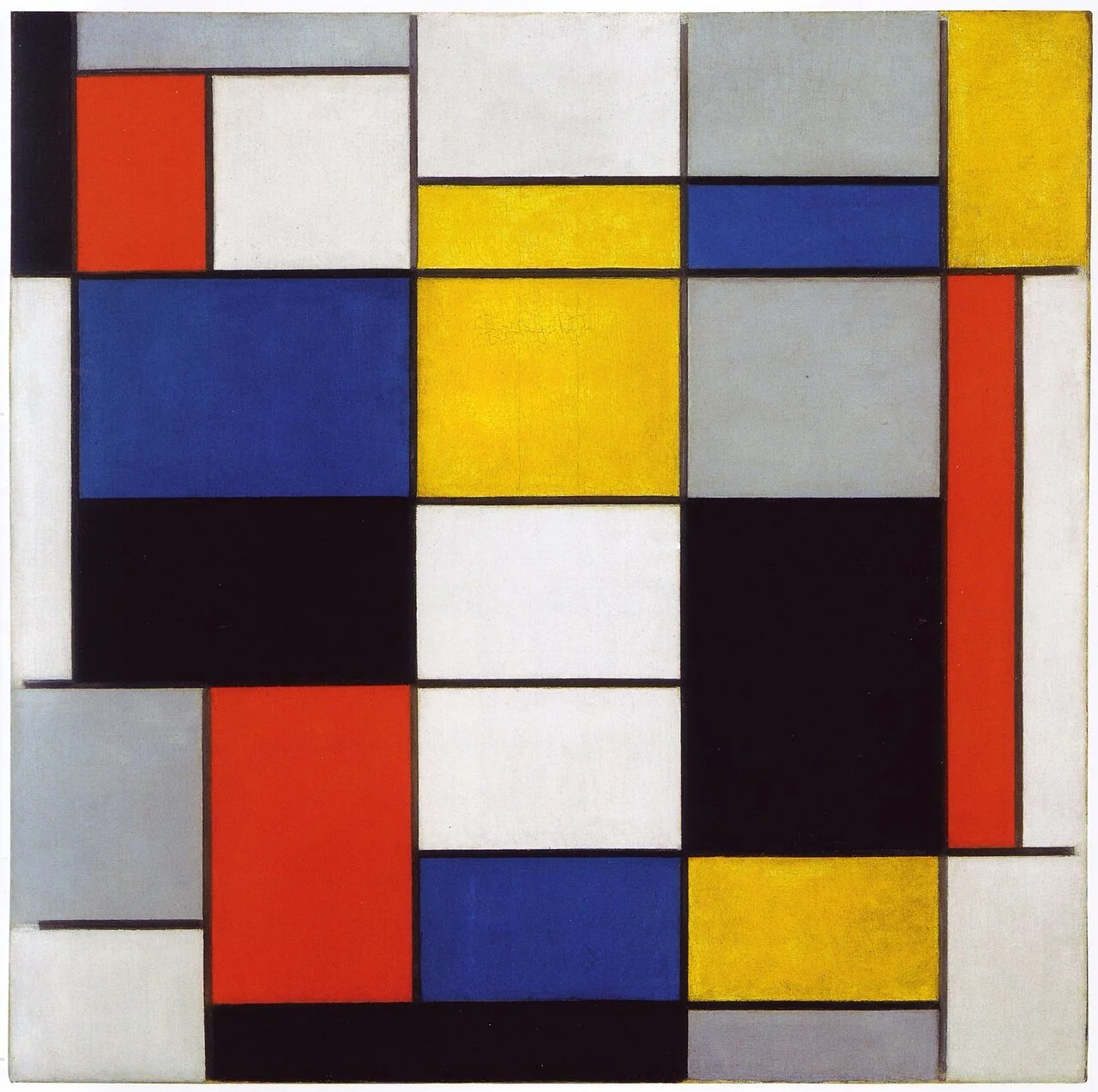
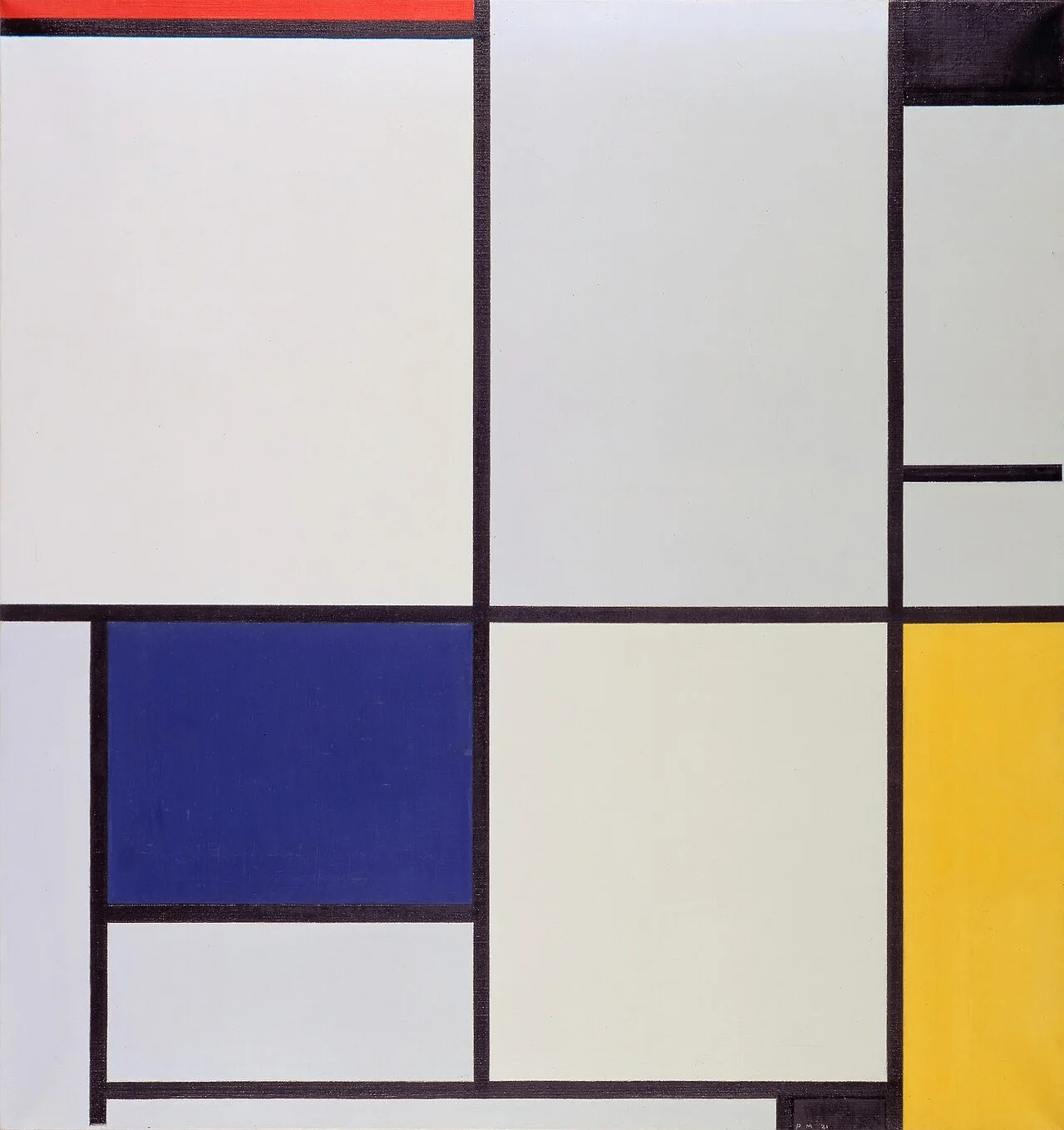
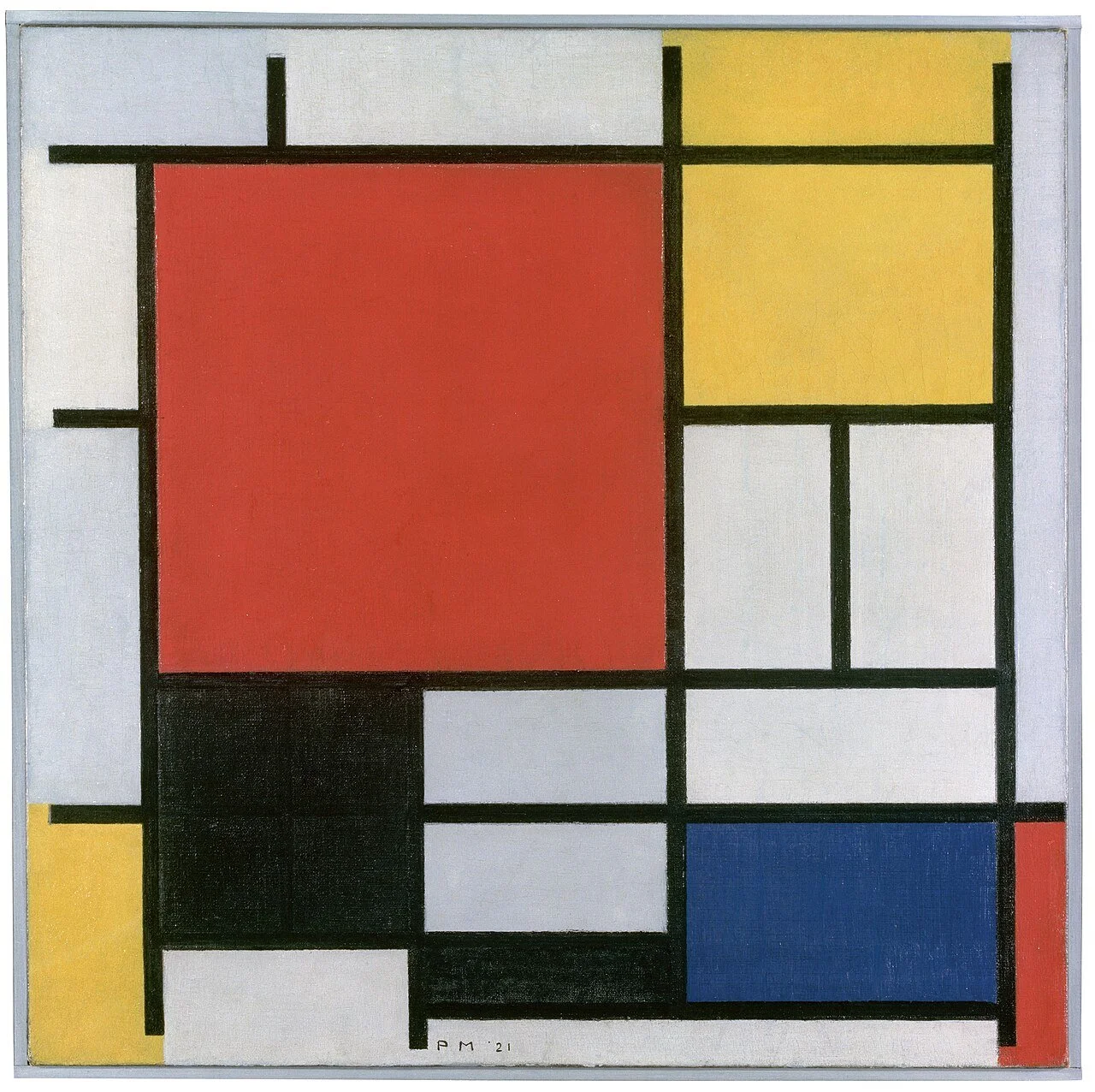
Mondrian, Piet. Composition A. 1920. Oil on canvas. Kunstmuseum Den Haag, The Hague.
Mondrian, Piet. Tableau I. 1921. Oil on canvas. Ludwig Museum, Cologne.
Mondrian, Piet. Composition with Red, Blue, and Black. 1929. Oil on canvas. Kunstsammlung Nordrhein-Westfalen, Düsseldorf.
Paintings such as Composition A, Tableau and Composition Red, Yellow and Blue evidently display his artistic style forming a strong cohesive mark on the art world. His work focused on:
Eliminating natural forms and details
Using only horizontal and vertical lines
Restricting colour to primary colour (red, yellow, blue) plus black, white and grey
Creating balanced relationships between shapes, lines and colours.
By stripping away the details, Piet Mondrian believed a beauty in harmony was revealed that could move not only the artist deeply but the viewer also. A revealing of universal truths through extreme simplicity, geometry and balance.
Avante Garde and NYC Grid Like Streets: experimentation, possibilities, and reimagining modern life
Having been profoundly influenced by the avant-garde scene in Paris, Mondrian discovered a new sense of freedom in the energy and rhythm of New York City. Fleeing the uncertainty of World War II, he moved from London to Manhattan in 1940, where he was captivated by the city's grid-like streets, bright lights, and vibrant jazz and boogie-woogie music scene.
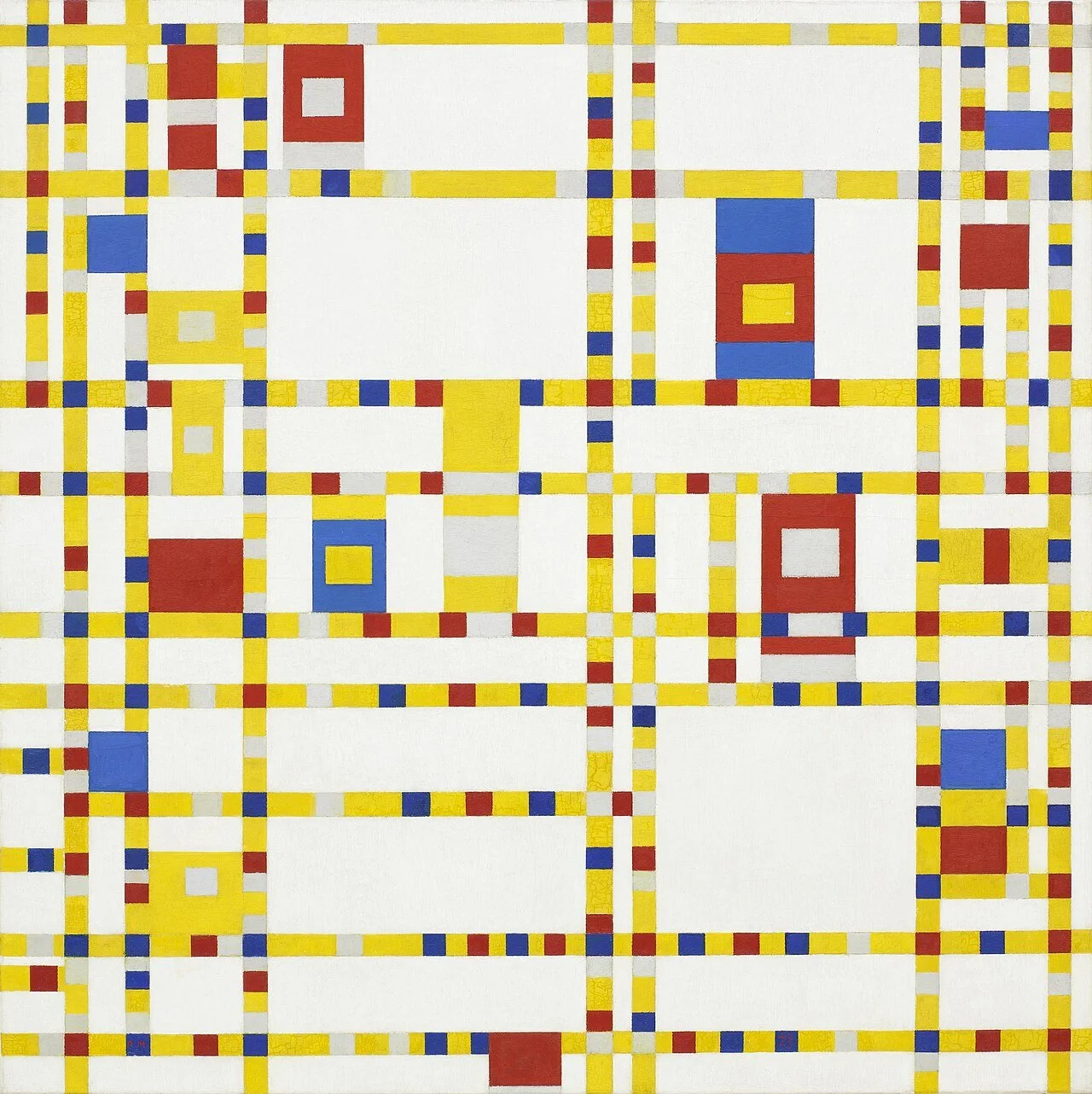
His New York paintings blended the principles of Neoplasticism with the movement and vitality of urban life. The rigid black lines of his earlier works gave way to more dynamic compositions that echoed the pulse of the city and the syncopated rhythms of jazz. Works such as Broadway Boogie Woogie reflect this evolution, transforming the city grid into a celebration of movement, energy, and modern life.
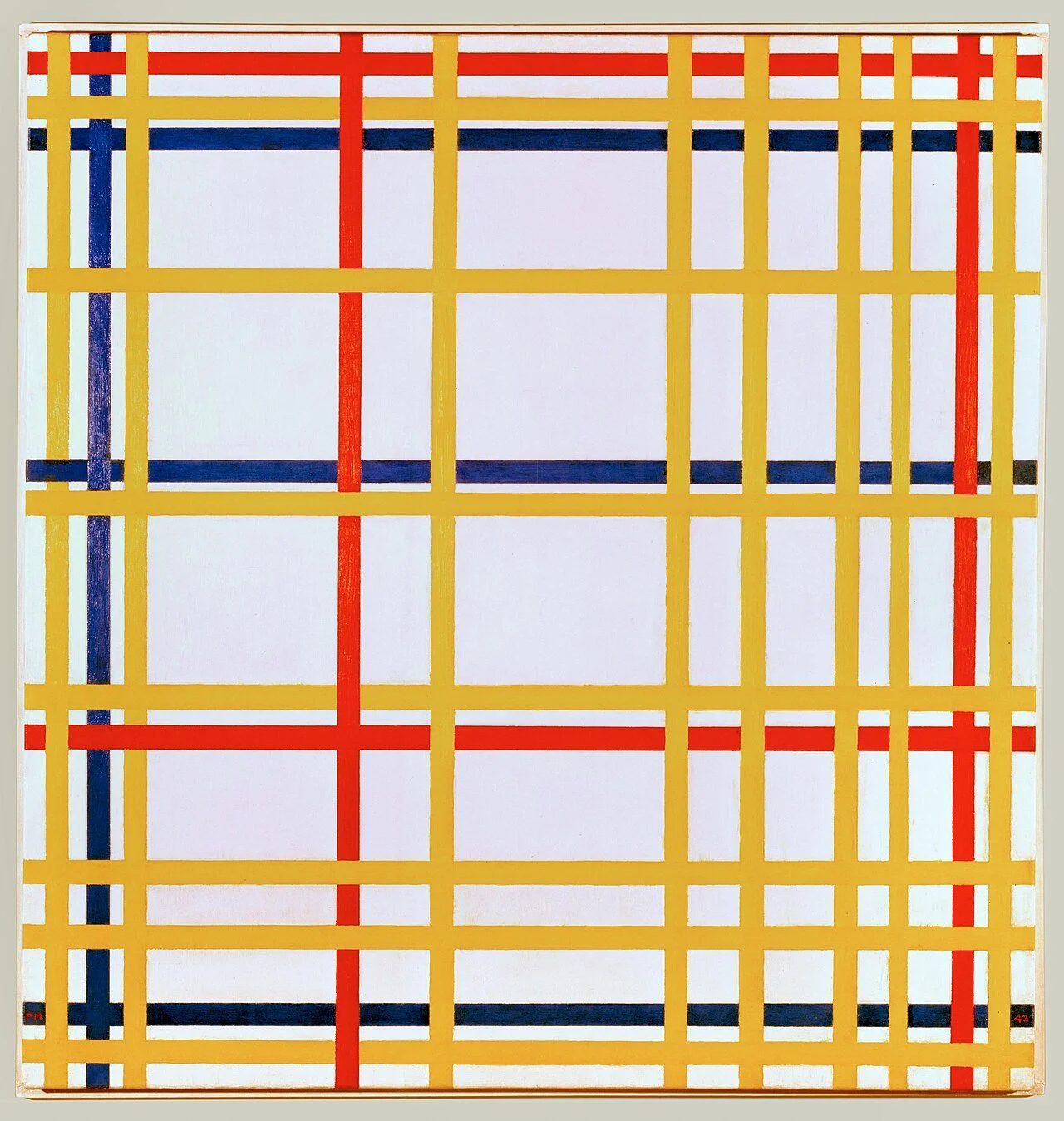
Piet Mondrian, New York City I (1942), oil on canvas, Musée National d'Art Moderne, Paris. Wikimedia Commons.
Piet Mondrian, Broadway Boogie Woogie (1942–43), oil on canvas, Museum of Modern Art (MoMA), New York.
Mondrian spent his final years in New York, where he continued to refine his artistic vision until his death from pneumonia in 1944. His funeral was attended by many artists, critics, and admirers who recognised the profound influence of his work and his lasting contribution to the development of modern art.
For Mondrian Neoplasticism was both an artistic method and life long pursuit of harmony, balance and universal order. A philosophy that guided his transformation from landscape painter to one of the most influential abstract artists of the twentieth century.
For Mondrian, art was not just confined to the canvas but was a way of organising and understanding his world.
Questions to consider through Piet Mondrian's eyes:
How has a change in location influenced your perspective and the way you create, think, or engage with the world?
When have you been forced to pivot, only to discover that the change became a successful chapter in the evolution of your ideas?
Where have you simplified your life to create greater harmony, balance, or clarity?
What inspires you beyond realistic representation? What unseen patterns, rhythms, emotions, or ideas shape the way you see the world?
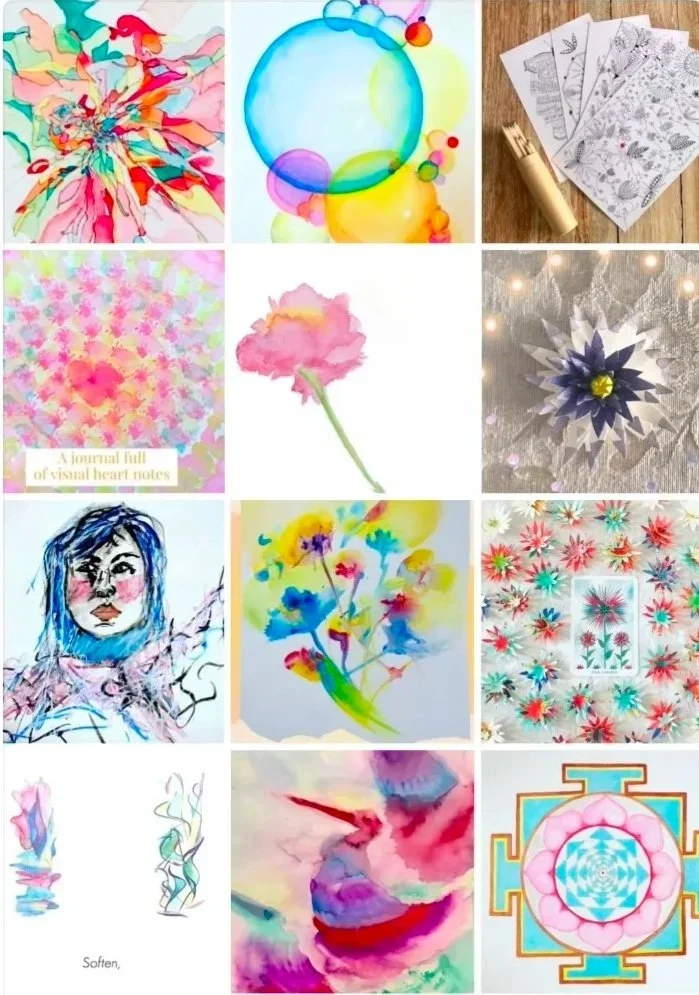
If you are feeling inspired to create and meet your muse, then sign up to our FREE Intuitive Art as Medicine eCourse!
A self paced intuitive art and neuroaesthetic eCourse for those seeking deep nervous system regulation, creative block relief, and transpersonal art practices from the comfort of your own home.