Chris Cornell: A Voice Built for the Stage, Bound to Emotional Truth
“The voice we hide is often the one that saves us. I sang because I couldn’t speak. I screamed because silence was killing me. Every song was a wound, stitched together by melody.”
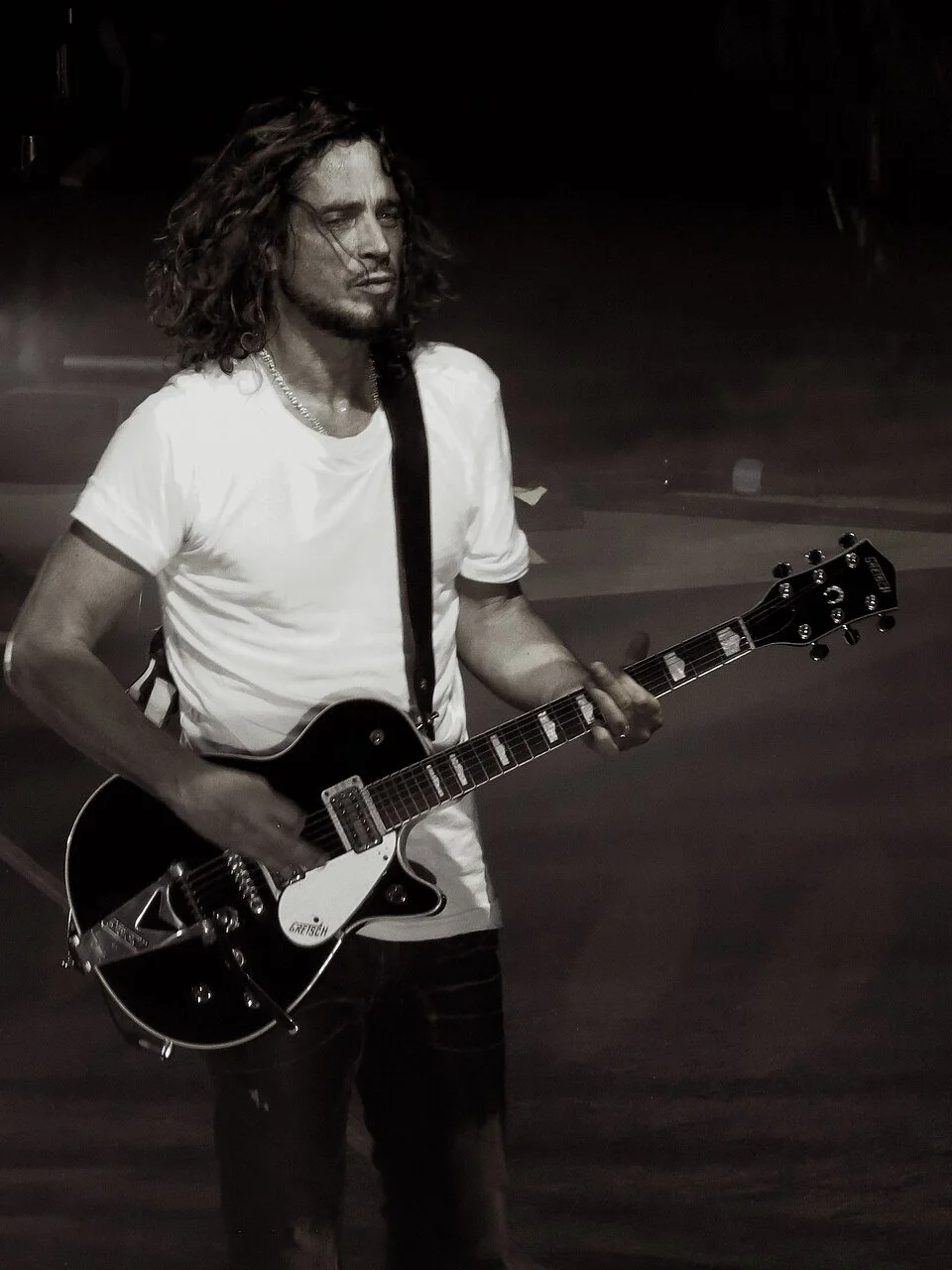
Chris Cornell, 2013. Photo by Matthew Straubmuller, licensed under CC BY 2.0, via Wikimedia Commons.
As my birthday approaches and I prepare to celebrate half a century, I thought it fitting to write about another artist who shares my birthday, 20 July, fellow Cancerian, Chris Cornell.
If you’re Gen X like me, chances are you were crushing hard on Chris Cornell in the early ’90s. Walking onto the stage as not only a rock god of grunge, he would also become known as a singer with an extraordinary vocal range, reportedly spanning four octaves, from C2 to A5. Later, his prolific songwriting talent would reveal yet another dimension to his artistry.
Chris Cornell’s songwriting would go on to span a diverse catalogue of more than 200 songs across Soundgarden, his side project Temple of the Dog, his solo career and, later, Audioslave.
Temple of the Dog was written and performed with friends to honour his late roommate, Andrew Wood of Mother Love Bone, who died of an overdose. Chris knew he needed to channel the pain, and it is through his songwriting that he processed the grief of a close friend taken too soon by addiction.
Cornell sometimes considered a loner away from the energy and intensity of his stage presence, often spoke of music as his saving grace. Perhaps that is why, beneath the power, range and sheer force of his voice, there was always something else: emotional truth.
“I know what it feels like to be hopeless”, Chris Cornell
Born in Seattle, Washington, on 20 July 1964, Chris was raised alongside five siblings, largely in a Christian household. As an anxious five-year-old, he would frequently venture to a neighbour’s house to explore their record collection. The Beatles’ Hey Jude captured his attention in particular, with Chris later describing the song as giving him a strange sense of euphoria.
By the time he was 11 or 12, hanging out with older kids had introduced Chris to alcohol, psychedelics and weed. This period would mark a turning point in his young life, as he began navigating intense anxiety, depression and agoraphobia. For about a year after experimenting with the drug LSD, he barely left the house and stopped hanging out with friends.
It would be his mother who bought him a snare drum, inspiring Chris to eventually buy a full drum kit. Music became the key that began to unlock the door to his isolation, and within two months, he had joined a band.
This saving grace gave Chris a way to unpack and channel the darkness that, at times, consumed his mind — a creative outlet through which he could navigate the highs and lows of his inner turmoil.
In 1979, at the age of 15, Chris would meet Kim Thayil. Five years later, Chris Cornell, Kim Thayil and Hiro Yamamoto would come together to form Soundgarden.
Chris initially intended to play drums, but that four-octave range, and, let’s face it, those long, luscious locks, had other plans. Chris would find himself stepping out from behind the drum kit to become Soundgarden’s lead singer and one of its principal songwriters. Then Pearl Jam’s new to be ex drummer, Matt Cameron, transitioned into Soundgarden making a good fit, and Ben Shepherd replaced Hiro to complete the band.
Seeing this picture of Chris Cornell, his Adonis eight pack body with a microphone wire wrapped around him, and he looked really gorgeous, but Soundgarden also happened to be really good. They were really integral and an important band.
Courtney Love
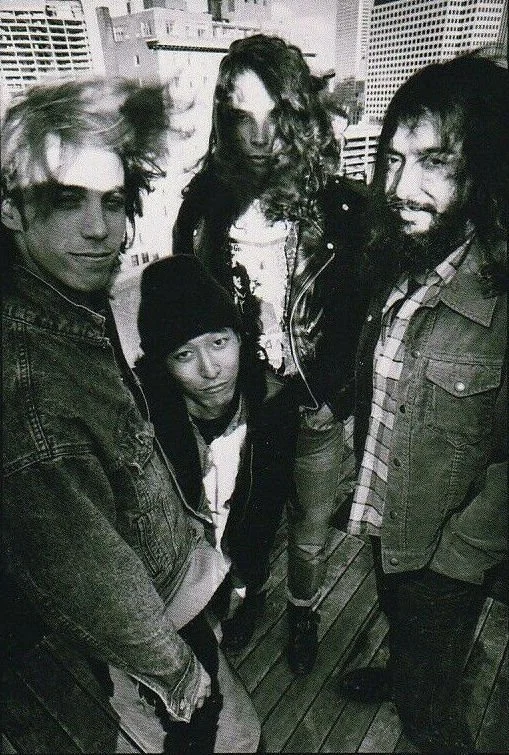
Soundgarden, 1987. Photo by Charles Peterson. Distributed by Sub Pop. Public domain in the United States, via Wikimedia Commons.
Soundgarden soon built a strong following in their hometown of Seattle. It wasn’t long before word of the singer with the big vocals, and the band’s hard-hitting sound began making its way through music circles. From their grassroots beginnings in Seattle, they would go on to support Guns N’ Roses in front of huge crowds around the world.
Chris’s powerful notes, technical vocal ability, emotional expression and sheer raw power would become the juice that helped define Soundgarden’s unique sound.
Following Ultramega OK in 1988 and Louder Than Love in 1989, Badmotorfinger arrived in 1991, shining an even brighter light on their sound with tracks including Rusty Cage and Outshined. Then came Superunknown in 1994, taking the band to new heights. The multi-platinum album debuted at No. 1 on the US Billboard 200 and would earn Soundgarden two Grammy Awards the following year. Fell on Black Days, Black Hole Sun and The Day I Tried to Live are just some of the gems from this extraordinary album.
But success and constant touring would take their toll. Chris would once again struggle with depression, while addiction increasingly became a way of coping with the darkness that could cast a spell over daily life.
By the late ’90s, several difficult chapters collided. Soundgarden had split following Down on the Upside, his marriage was under strain, and in 1997 his friend Jeff Buckley drowned in the Wolf River Harbor, a channel of the Mississippi River. Chris would later release his debut solo album, Euphoria Morning, in 1999, but its commercial reception did not match the heights Soundgarden had reached. He would also go on to write a song in dedication to his late friend Jeff Buckley, called Wave Goodbye. Another pearl of wisdom that would again help process his pain of a dear friend he had great respect for since gone.
His solo career would eventually span Euphoria Morning (1999), Carry On (2007), Scream (2009), the acoustic live album Songbook (2011), and Higher Truth (2015).
Addiction had become a coping mechanism, but Cornell would eventually enter recovery and begin a new chapter. Audioslave would prove to Chris and perhaps to the world, that he could exist outside Soundgarden while continuing to explore the breadth of his voice and songwriting.
Across Audioslave (2002), Out of Exile (2005) and Revelations (2006), Cornell found new terrain for that unmistakable voice: still powerful, still searching and, as ever, bound to emotional truth.
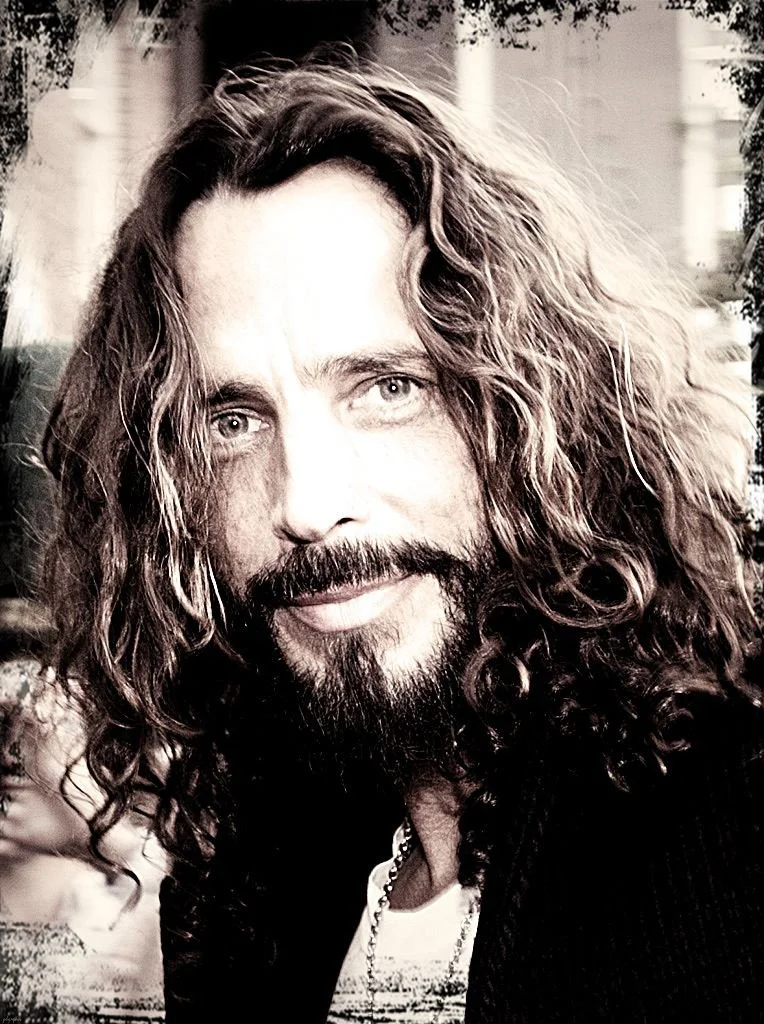
Chris Cornell at the Toronto International Film Festival, 2011. Photo by Gordon Correll (gdcgraphics), licensed under CC BY-SA 2.0, via Wikimedia Commons.
Chris Cornel would remain sober from 2003 to around 2016 enjoying family life and, as much as any touring rock star can, the simple things in life.
Soundgarden reunited in 2010, releasing King Animal in 2012. On 17 May 2017, Chris performed what would become his final concert with Soundgarden in Detroit. In the hours following the show, he was found unresponsive in the bathroom of his hotel room and was later pronounced dead. His death was ruled a suicide.
His wife, Vicky Cornell, and their children would later file a lawsuit against his doctor, alleging that prescription medication had been over-prescribed and may have impaired his judgement. The case was ultimately settled confidentially.
One thing is certain amid this tragedy: Chris Cornell’s voice will never be forgotten, and his songwriting will continue to be cherished — particularly by those facing their own struggles who find solace in his songs and the feeling that they are not alone.
Chris himself spoke about the comfort he found as a young person in hearing songs that reflected feelings similar to his own. Music could make the darkness feel less isolating. If someone else could write about those emotions, then perhaps he wasn’t the only one experiencing them.
Throughout his life, Chris channelled much of his inner world into music. Across an immense and diverse catalogue spanning Soundgarden, Temple of the Dog, Audioslave and his solo career, he became one of the most distinctive and respected voices and songwriters to emerge from the grunge era.
In a beautiful continuation of that legacy, his daughter Toni Cornell delivered a hauntingly beautiful cover of her father Chris Cornell’s song, Fell on Black Days, at the Soundgarden’s 2025 Rock & Roll Hall of Fame induction.
A voice built for the stage, bound to emotional truth.
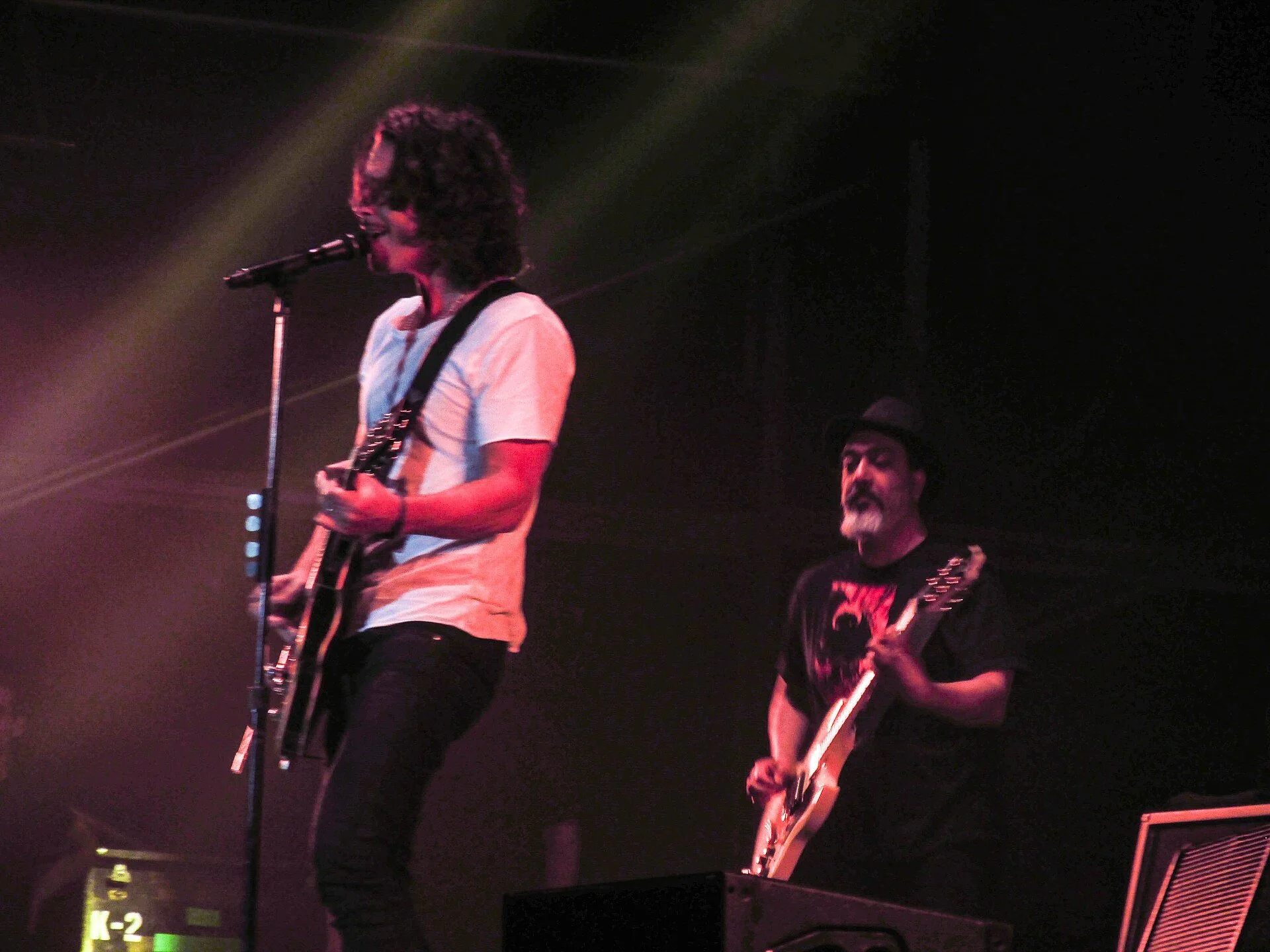
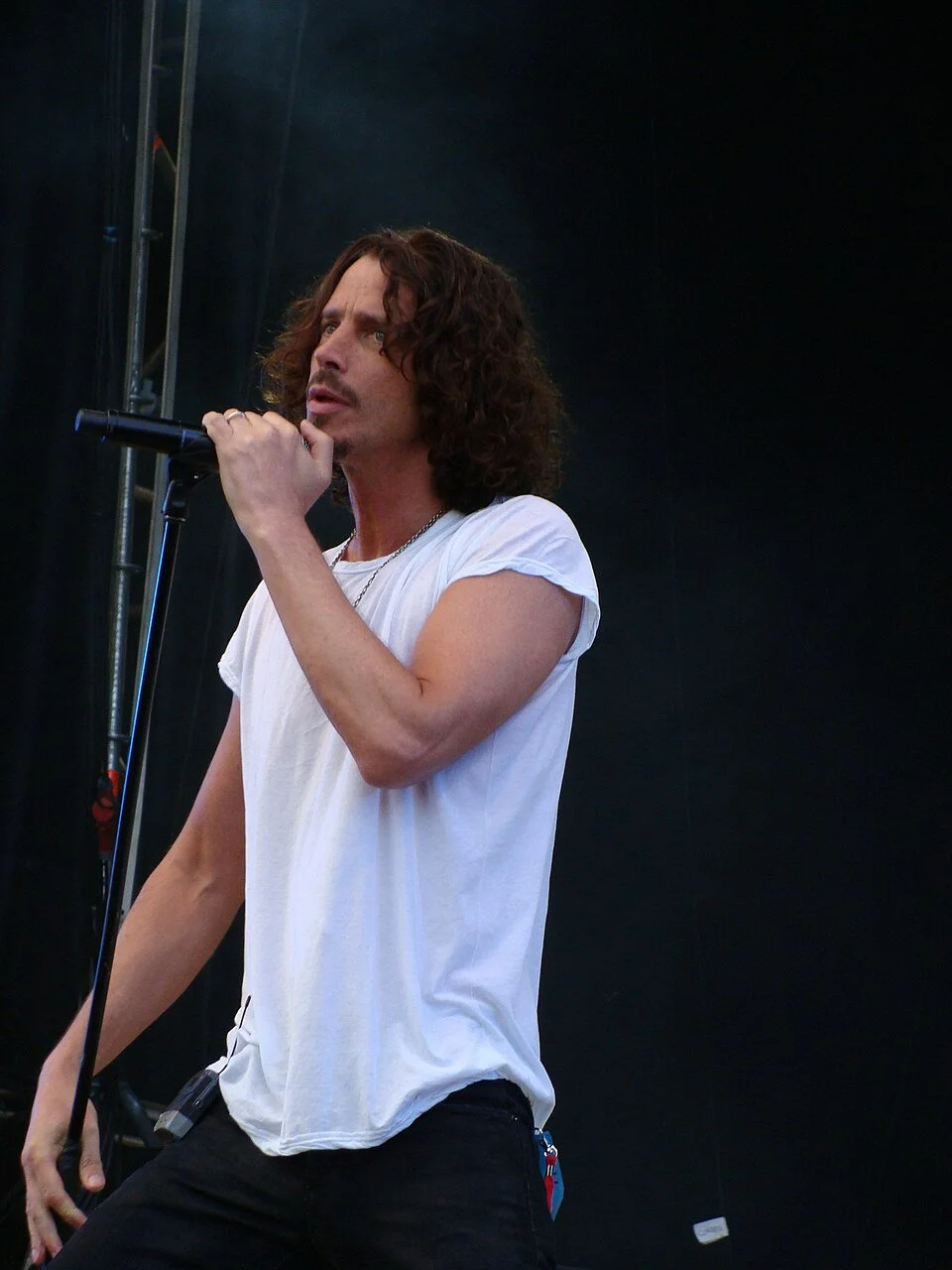
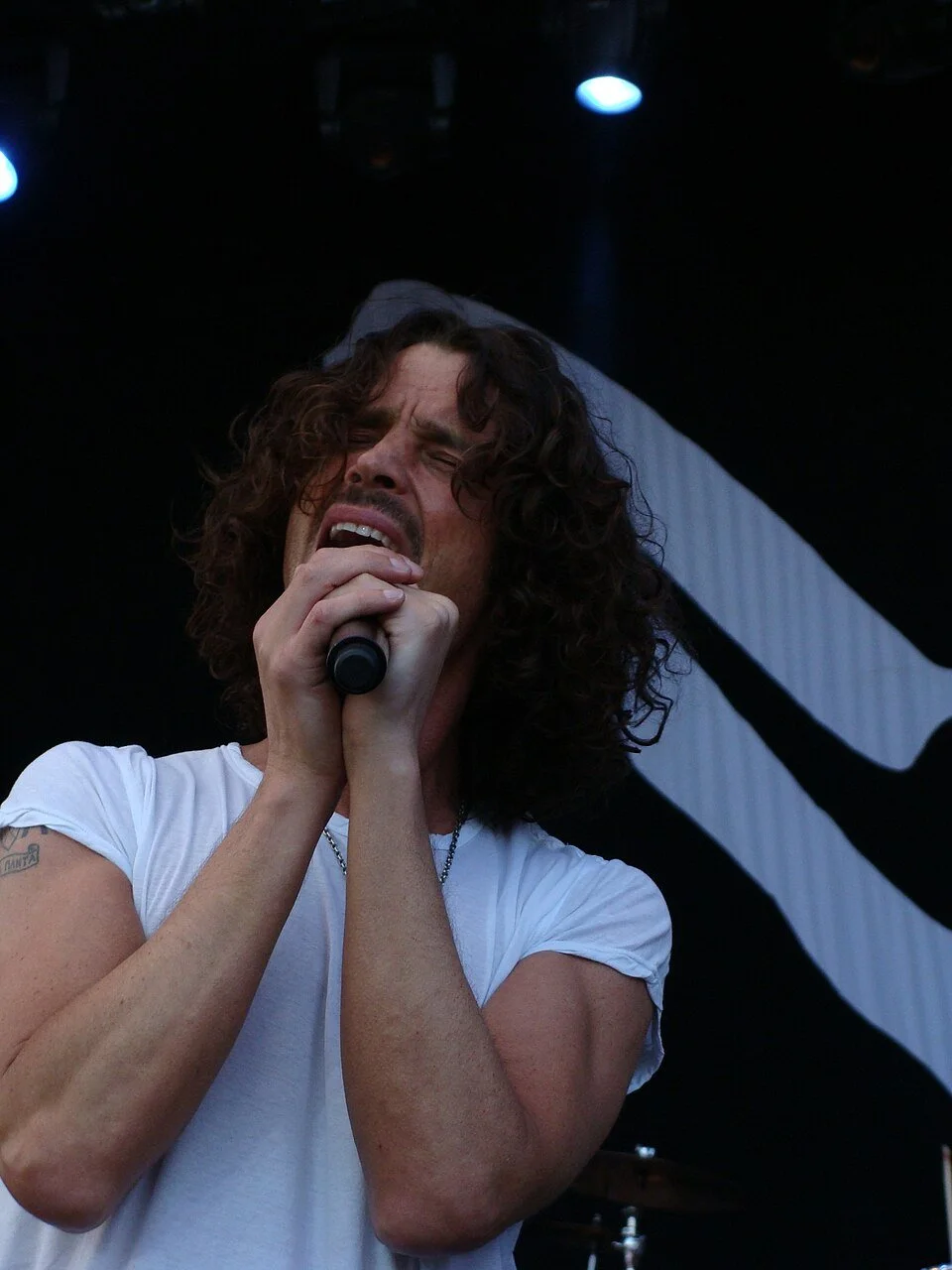
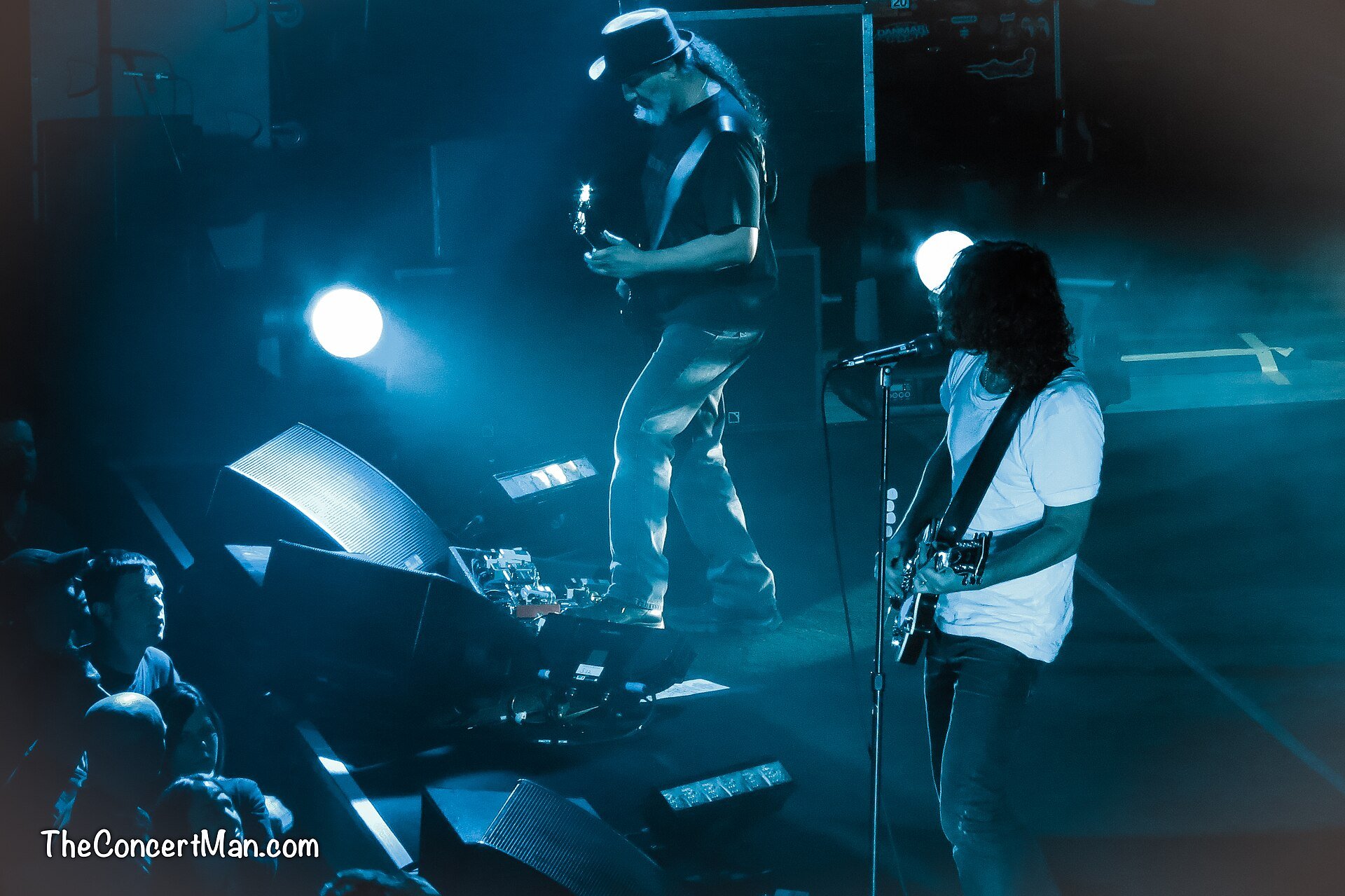
Chris Cornell at Bilbao BBK Live, 2009 (Images 1 & 2), photos by Alberto Cabello, CC BY 2.0; Chris Cornell & Kim Thayil performing in Auckland, 2015 (Image 3), photo by Sara (Que Sara Sera), CC BY 2.0. Images via Wikimedia Commons.
If any of the topics discussed in this article have affected you, support is available.
In Australia, the National Alcohol & Other Drug Hotline provides free and confidential support on 1800 250 015.
Beyond Blue also provides mental health information and support, and Lifeline offers 24hr crisis support on 13 11 14. You can also find helpful free resources at www.blackdoginstitute.org.au
If you find yourself outside of Australia, please reach out to your local GP for your countries services available. Starting a conversation with the right health advocate is the first step to accessing tools and support needed that can help.