Vibe Code: a new generation of experimenters
On 2 February 2025 a new term entered the collective consciousness on X (formerly Twitter), introduced by former Tesla Director and open AI Co founder Andrej Karpathy. Vibe Code dropped into the coding scene as a concept that captures the bridge between the public’s growing curiosity and the immense capabilities of Open AI’s expanding eco-system.
Andrej Karpathy.
“There's a new kind of coding I call "vibe coding", where you fully give in to the vibes, embrace exponentials, and forget that the code even exists. It's possible because the LLMs (e.g. Cursor Composer w Sonnet) are getting too good. Also I just talk to Composer with SuperWhisper.”
We’re witnessing a new generation of vibe coders emerging through curiosity, exploration and continuous back and forth iteration with AI. As the collective shifts in how it gathers source material for creative pursuits and investigation, the potential of these tools becomes impossible to ignore — especially when the coding powers of systems like ChatGPT land in the hands of the novice.
In collaboration with AI, a novice with no formal developer background can embark on a journey driven by curiosity, experimentation, failure, iteration, sheer will and the stamina to try again for hours on end. And from that process the foundations for a small-scale app can genuinely take shape.
It carries a sentiment of, “I’ll just figure it out as I go and see what happens.” There is a palpable lure to what is possible.
Designveloper mentions in, What Is Vibe Coding? Origin, Examples and How to Use, “As AI generates code so fast, it helps vibe coders prototype their ideas and experiment quickly. If something doesn’t work, they can ask AI to adjust, fix, and regenerate. By lowering technical entry barriers, AI enables even non-developers or those with limited programming skills to develop simple apps. “
Vibe Code has caught fire so much so, that the term has even made it into the Slang Dictionary. In March 2025, Merriam-Webster listed “vibe coding” as a “slang & trending” term. Later in 2025, Collins Dictionary named “vibe coding” its Word of the Year, citing a surge in usage across media and tech communities.
So what does this mean for the developer community when the broader public is encouraged to align with tech elite forecasting — “The Startup Momentum” that urges everyone to get busy, start prompting and build something before they miss out. This framing suggest rapid creating is the future.
But here, we are not talking about professional developer environments where stakes are high, where security is non negotiable and craftmanship is valued for its depth and expertise. designdeveloper mentions: “Coding with vibes is considered a fun way to build software, and the majority of developers (72.2%) refuse to use it in their professional development work.”
On the other hand, for personal creative pursuits, we can as creatives see it as a tool for cross-pollination — sparking new ideas and enabling us to build functional systems that would have previously alluded us.
Beyond individual creativity, Vibe Code also has the potential to bridge systemic gaps within organisations. By providing a shared language or framework it can connect departments that usually operate in silos — developers collaborating more seamlessly with marketing, designers aligning with product teams, or strategy linking with operations. In this sense, Vibe Code isn’t just about sparking ideas; it’s about creating functional, interconnected systems where different expertise flows together to produce more cohesive outcomes.

Dog-e-Dex
For instance, Cynthia Chen, a Block Product Designer with no formal engineering background was able to realise her dream App with assistance from Replit and Anthropic’s Claude - cataloguing dogs discovered in the wild. More on that here.
In the academic sector, researchers are already studying “vibe coding” as a new paradigm. For instance, Good Vibrations? A qualitative study of co-creation, communication, flow, and trust in Vibe Coding can be found here.
Coding as a creative source in mind play: Rick Rubin
At the X4 Summit in Salt Lake City, Rubin spoke about creativity, AI, and coding as a creative act. He described coding and product development as “acts of imagination,” aligning with the vibe-coding idea of intuitive creation rather than rigid rule-following.
On the podcast The Ben & Marc Show he elaborated the concept further, calling vibe coding “the punk rock of software” and explaining how giving AI natural-language prompts rather than structured code reflects a new creative ethos.
Rubin frames vibe coding not just as a technical shift, but as cultural — akin to how punk rock changed music by saying “you don’t need conservatory training, just an idea and guts.” He draws the parallel that coding can now be more about idea + prompt + iteration rather than deep programming expertise.
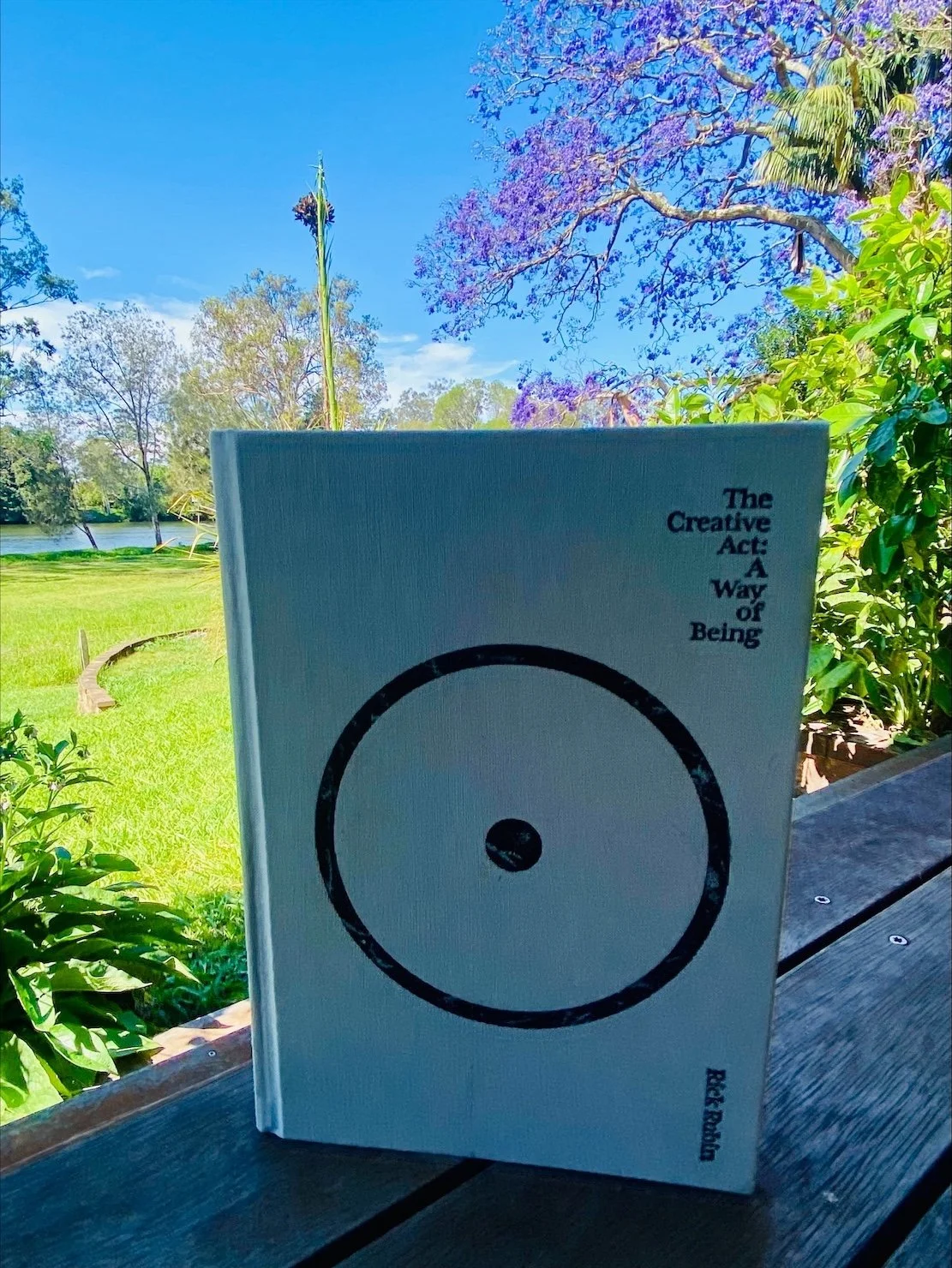
The Way of Code: The Timeless Art of Vibe Coding is an interactive book created with the AI chatbot Claude.
The Creative Act: A Way of being, is a book on the path as the artist and how to simply be.
“Rubin is right, and true creativity starts when you stop trying to follow the script.” Neil C. Hughes, Cybernews
As creatives we can take on the role of director, envisioning the possibilities of our creative pursuits within this emerging paradigm. Whether you are Vibe Coding or not, the rapid results generated by AI prompts, whether for travel itineraries, cooking recipes, or research — are quickly becoming integrated into the collective as a go-to source of inspiration and material.
So have you been diving into the world of Vibe Coding and AI prompting?