David Bowie: Chameleonic, a life painted in personas
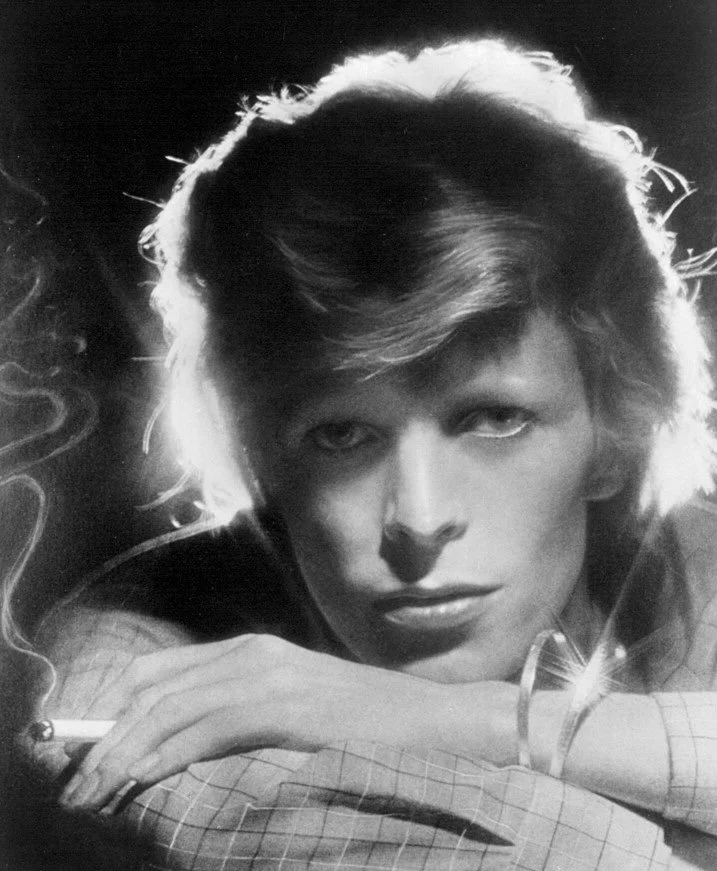
David Bowie, 1975. RCA Records
For David Bowie, sound and vision fueled a spirit forever in motion. To unpack the many faces of David Bowie is to dive deep into a world of creative wonder and reinvention across every art form.
Even in his teenage years, an event would leave a lasting mark on David Robert Jones’s life — a testament to both his uniqueness and the tension between the performer he would become, David Bowie, and the ordinary day-to-day existence of David Jones.
At 15, Jones got into a fight with a school friend, George Underwood, reportedly over a girl they both liked — teen angst at its finest. During the scuffle, George punched Bowie in the left eye, causing serious damage: a scratch to the eyeball that led to anisocoria, a condition in which the pupils remain permanently different sizes. As a result, Bowie’s left eye stayed dilated, giving the impression that his eyes were two different colors — one light blue, the other darker.
What might have seemed a misfortune became a defining feature, a physical mark that mirrored the futuristic, otherworldly characters Bowie would soon embody on stage. From the glittering alien brilliance of Ziggy Stardust to the haunted elegance of the Thin White Duke, Bowie’s life became a living canvas, a continuous study in reinvention, rebellion, and the art of becoming.
Introducing the canon of characters that blurred the lines between music, theatre, and myth.
Folk Dreamer (1960s): Embracing the countercultural spirit and gender-fluid energy of Swinging London, Bowie’s early years were marked by skirts, long hair, dresses, and free-flowing garments that blurred the boundaries between art, sex, and identity reimagined.
Ziggy Stardust (1972): His androgynous alien rockstar persona fused glam, science fiction and sexuality.
Aladdin Sane (1973): A darker, fractured “Ziggy in America" character, exploring, fame, and madness.
The Thin White Duke (mid - 1970s): an elegant yet unsettling figure born from Bowie’s cocaine-fueled excess and growing isolation. A precursor to his Berlin period, where recovery and artistic rebirth took root. It was a time of confronting darkness, transforming it into creative renewal, and saying farewell to the past excess while stepping into the present.
Berlin Trilogy (late 1970s): He reinvented himself again through minimalism and experimental electronic music influenced by Brian Eno and Krautrock.
Let’s Dance (1983): Collaborating with producer Nile Rodgers, Bowie fused his avant-garde instincts with sleek, dance-driven pop, crafting hits like “Let’s Dance,” “China Girl,” and “Modern Love.” A new level of fame was born amidst the MTV era of the 80s.
The ‘Heathen’ and ‘Reality’ Years (2000s): The music was textured and deeply human, blending electronic nuance with rock tradition. A coming of age with the birth of his daughter Alexandria “Lexi” Jones. Bowie spoke of wanting to create music his daughter might one day want to hear, signalling a turn toward warmth, clarity, and emotional honesty.
Black star (2016): Bowie delivered his final, breathtaking statement — an album conceived amid illness yet pulsing with creative liberation. Drawing on avant-jazz, electronic textures, and theatrical abstraction, he transformed his confrontation with mortality into art of staggering depth. Doing what he new best, making sense of it all through art.
Artistic Extract: A creative approach in which an artist draws selectively from multiple sources, experiences, and mediums to distill ideas, emotions, or themes into a cohesive work.
David Bowie’s explorations spanned a vast array of channels — drawing from theatre, literature, painting, and iconic collaborations. Through these mediums, he sought to engage with life’s deeper questions and to reimagine what the extraordinary could be. Ultimately, he seemed to ask: what is truth? A philosophical mind, using art as his oracle.
Throughout his vast canon of work, Bowie engaged in collaborations that shifted his creative axis, serving as both muse and catalyst for the next vision.
Shifting the Axis, Painting:
Though Bowie had always been visually driven, his passion for painting deepened significantly in the 1990s. He had studied art and design in his youth and later returned to it as a form of meditation. His style was expressionistic and psychological, often influenced by German Expressionism —the same movement that shaped his Berlin-era music. Painting became an offset to his dominant craft of music, providing a space that could refuel his creative fire.
“I try and visualise what the problem was … then find out what was wrong … and then take it back into the studio.”
We gain a sense that Bowie’s catalogue, vast and relentlessly boundary-pushing, was deeply shaped by collaboration with other equally innovative creatives, always aiming to raise the bar. An avid experimentalist and an artist of extraction, Bowie was a composer of experience, constantly filtering inspiration through an ever-changing muse. That muse, in many ways, was the people and encounters that informed his visionary pursuits.
Ultimately, Bowie worked for himself first: “Never play to the gallery … Never work for other people in what you do.” He consistently challenged limits, insisting, “If you feel safe in the area you’re working in, then you’re not working in the right area. Always go a little further into the water than you feel you’re capable of being in.” In this way, Bowie’s life chameleonic and multifaceted was a living canvas, painted in personas and fearless reinvention.
At the heart of his work was wholehearted engagement — with life, people, and the ever-changing muse of experience.
The Collaborations:
-
His first major muse, Kemp taught Bowie to mime, move, and how to express emotion through performance. Kate Bush also studied under Lindsay Kemp.
-
Helped spark Bowie’s creation of Ziggy Stardust and glam rock driven theatrics.
-
Helped design costumes, push boundaries, and encourage Bowie’s exploration of sexuality and androgyny.
-
Originally from Algeria, Laroche met him in London while working for Elizabeth Arden. Pierre Laroche was the creative force behind some of Bowie’s most iconic looks: the lightning bolt of the Ziggy Stardust era, the blue eyeshadow of Life on Mars?, and he also served as a consultant on the Rocky Horror Picture Show film. A proud advocate of his Algerian heritage and a fan of Japanese Kabuki theatre, Pierre inspired Bowie to describe him as “my Picasso.”
-
Guitarist, arranger, co-producer on the early glam era (Ziggy Stardust, Aladdin Sane).
-
In 1972, Bowie co-produced Reed’s album Transformer alongside Mick Ronson. However, the appeal of Lou’s talents started earlier on in the 1960’s when a manager shared Velvet Underground’s Andy Warhol album. Bowie, commented in an interview on the album, ‘it was a revelation to me’. ‘Dylan had certainly brought a new intelligence to pop writing, but Lou had taken it even further to the avant-garde.
-
Co-wrote and arranged many albums from Space Oddity through the ’90s. Their first major collaboration came on Space Oddity (1969), and by the early 1970s, Visconti had become Bowie’s go-to producer and musical partner. He produced The Man Who Sold the World (1970) — marking a turning point from Bowie’s folk-influenced work toward a heavier, electric sound Hunky Dory (1971). He produced The Rise and Fall of Ziggy Stardust and the Spiders from Mars (1972) and continued through the Berlin Trilogy and beyond. Their creative chemistry was extraordinary — Visconti not only produced but also arranged strings, played bass, and co-shaped entire sonic identities for Bowie’s records. Their partnership during this era was one of artistic trust and technical daring.
-
In 1975, Bowie co-wrote and performed on “Fame,” with Lennon, which became his first U.S. number-one single. “It was John who started riffing on ‘Fame,’ screaming at the top of his voice in the studio. … He was the energy, and that’s why he’s got a credit for writing it; he was the inspiration.” At the time of John Lennon’s tragic death in 1980, Bowie was living in New York City and was deeply shaken by the loss of his friend. Concerned for his own safety and fearful that he might meet a similar fate, he sought refuge in Switzerland for a period of seclusion.
-
Collaborated on the hit Under Pressure, whilst both happened to be recording at Mountain Studios in Montreux, Switzerland. It was an impromptu, spontaneous, and highly creative session, that unleashed the most memorable of rock anthems of the era.
-
Co-produced Let’s Dance and recorded with David in Compass Point Studios in Sydney. When developing his “Let’s Dance’ song, Bowie wanted a distraction free environment (Australia) and also took an interest in Australia’s Indigenous culture, rich tradition, mythology (Dream Time), and the connection to the land.
-
Long-time Bowie collaborator, Carlos and David Bowie first met in 1974 during the Young Americans sessions, forming an immediate creative bond that would span over three decades. As Bowie’s longtime guitarist and musical collaborator, Alomar co-wrote hits like “Fame” and helped define the rhythmic backbone of albums from Young Americans through the Berlin Trilogy and beyond, blending funk, soul, and art-rock into Bowie’s evolving sound.
-
A kindred spirit, Bowie was inspired by Iggy’s raw energy and later helped resurrect his career. (The Idiot, Lust For Life). A mutually inspired collaboration anchored in Berlin.
“David’s friendship was the light of my life. I never met such a brilliant person. He was the best there is.” Iggy Pop
-
Their collaboration birthed ‘Low’, ‘Heroes’, and ‘Lodger’. Eno encouraged Bowie to experiment, and embrace minimalism, emotion and sound as art.
-
Iconic supermodel, beauty entrepreneur, activist and the love of his life. She became his true muse in the classic sense - a source of peace.