Basquiat: Turn It Up, Let It Flow
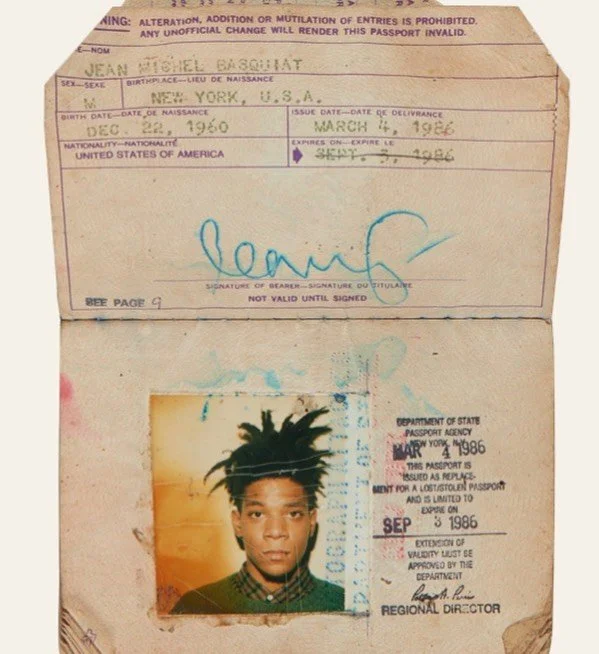
Jean-Michel Basquiat
“I never went to an art school. In fact, I failed a lot of the art classes. I just looked at a lot of things. That’s one thing I learned from art was just looking at it.”
Image: Jean‑Michel Basquiat’s U.S. passport (c. 1986), public domain (mechanical scan of a public domain government document). Source: Wikimedia Commons.
Brooklyn, NYC, 1960
Jean-Michel Basquiat was born in Brooklyn, New York, to a Puerto Rican mother, Matilde Andrades, and a Haitian father, Gérard Basquiat. By the age of four, he spoke English, French, and Spanish fluently. While his father, an accountant, provided the structure of a middle-class upbringing, it was his mother who exerted the strongest influence on his artistic direction, nurturing his early exposure to art and culture.
The Musuem
At the age of six, Matilde enrolled Jean-Michel as a junior member of the Brooklyn Museum of Art. This early institutional exposure helped deepen his visual vocabulary and appreciation for art. Accompanied by his mother, Basquiat roamed the museum’s galleries, absorbing the raw energy of Jean Dubuffet, the fractured perspectives of Pablo Picasso, the emotional intensity of Francis Bacon, and the gestural freedom of Jackson Pollock. African and Caribbean forms, exploring masks and artefacts, added symbolic depth to his visual language, laying the foundation for the Neo-Expressionist imagery that would later define his work.
The Accident
At just seven years old, Jean-Michel’s childhood was abruptly jolted when he was struck by a car while playing on the streets of his Brooklyn neighbourhood. The accident left him with a broken arm and the removal of his spleen. Once again, his thoughtful mother, Matilde, brought him a copy of the book Grey’s Anatomy — a detailed medical text book that would provide SOURCE MATERIAL later on and influence his artistic investigations. Anatomy and the human form made a lasting impression, as his mother could join the dots ⚫️ ⚫️ ⚫️ between hospital recovery and learning something of value.
It was during this period that his parents divorced. By the age of ten, Jean-Michel’s mother was admitted to a psychiatric hospital and, for much of the remainder of her life, moved in and out of mental health institutions.
Although Basquiat was raised in middle-class Brooklyn and exposed to a richly multicultural upbringing, including a brief period living in Puerto Rico with his father and sisters between 1974 and 1976, the instability created by his mother’s absence took on new meaning when he returned to Brooklyn at sixteen. Her absence became a silent thread that connected them, woven through his art. It was the very practice she had encouraged in him as a curious young boy that ultimately sustained that bond.
When returning to Brooklyn, Jean-Michel struggled in non traditional school subjects. Gradually, he veered away from his father’s aspirations for a conventional business-oriented life — a divergence that, as so often happens, creating a tension between parent and child when parental success clashes with nonconformist passions. Eventually, Jean-Michel found himself living on the streets and experiencing life beyond the boundaries of his middle-class upbringing.
The Streets
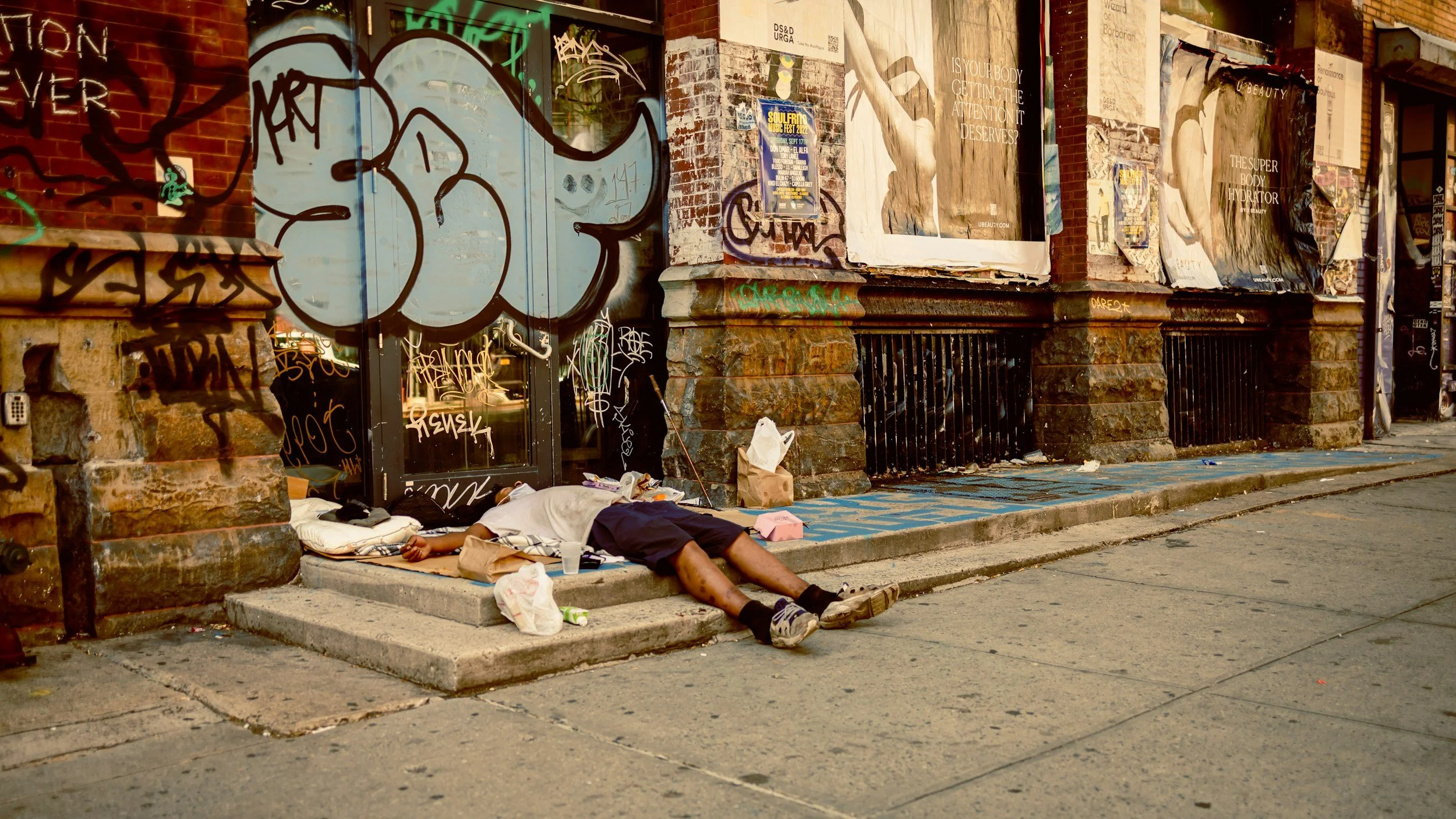
SAMO ©
"Same ole Shit”
It was a friendship at 17 years of age with Al Diaz (Bomba-1) that organically formed at the City-As-School, High School, an alternative school for creative students.
Graffiti Poetry
They collaborated to scrawl cryptic, witty, and philosophical statements around lower Manhatten in the late 70’s (1978). Turning street tagging into recognition with local media forming early visibility of Samo’s (Basquiat) text-rich approach. Around 1979 Basquiat famously tagged “Samo is dead” and walked away from the street project altogether.
NEO EXPRESSIONISM
Early on, during his formative museum visits, Basquiat became aware of the absence of meaningful Black representation. This awareness marked by questioning, dissatisfaction, and a deep-seated belief in the inherent worth of all people formed the undercurrent that fueled the extraordinary body of work he produced over a focused ten-year period.
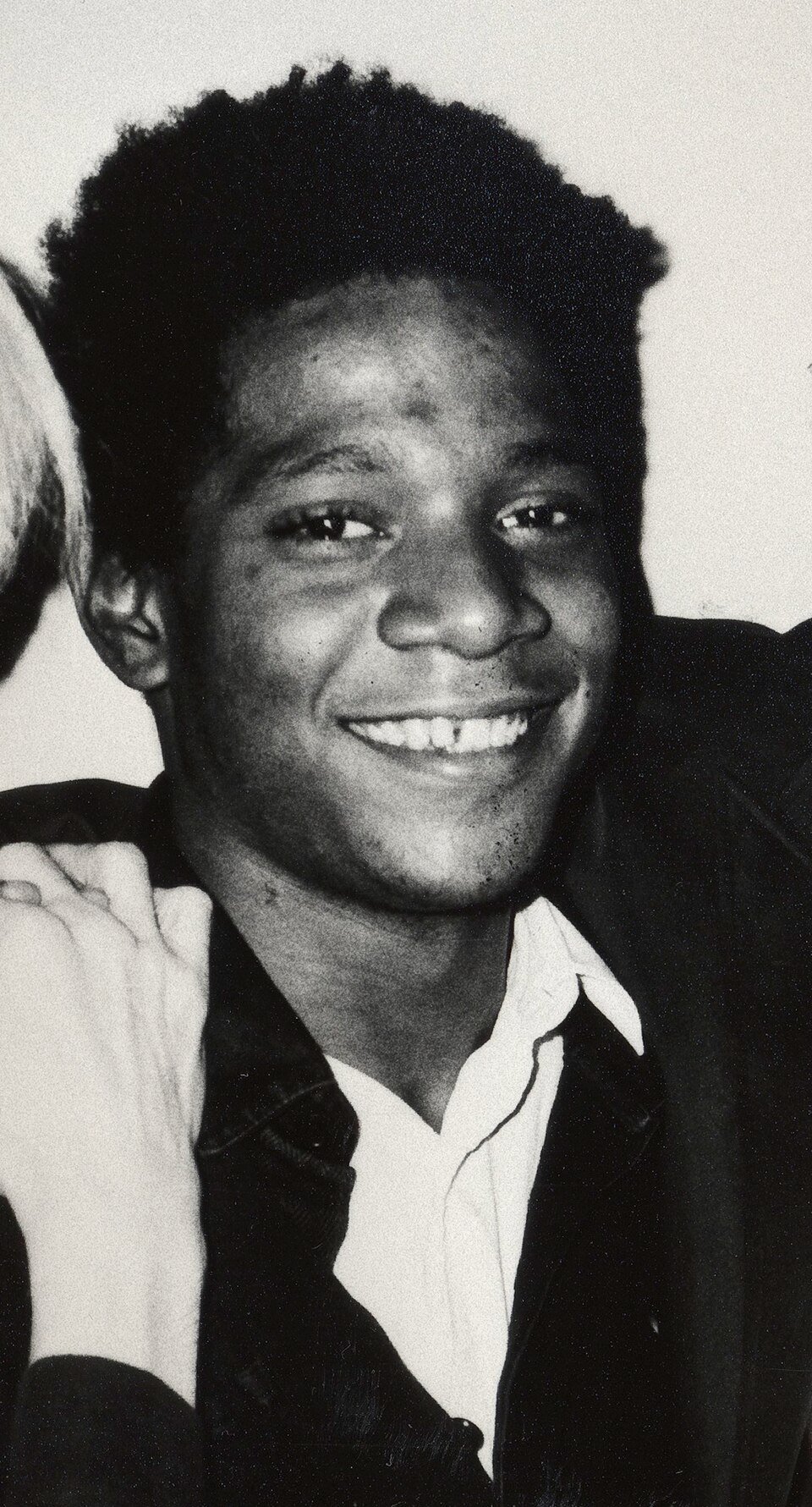
DRIVE, FOCUS, DEDICATION
Basquiat produced 2,000 paintings. 1,000 drawings in a ten year block period.
Photo: “Andy Warhol, Jean-Michel Basquiat, Bruno Bischofberger and Francesco Clemente, New York, 1984”, by Galerie Bruno Bischofberger, licensed under CC BY-SA 4.0. This image has been cropped to focus on Basquiat.
Source Material
By 1979, Basquiat was painting on walls, cardboard, hallways, and any surface he could find in his apartment. Every space became open to expression, transforming his living environment into a studio that reflected his cultural influences and lived experiences at the time. Cardboard became a primary surface out of necessity — money was scarce — establishing an ethos in which any material, surface was fair game. To make ends meet, the eighteen-year-old sold hand-painted postcards for one to five dollars on the streets of SoHo. On one memorable occasion, he approached Andy Warhol in a restaurant to sell him a one-dollar postcard.
Shortly after Basquiat moved from trying to make a buck to being discovered at ‘The Times Show Square’ 1980 raw, artist run group show that many curators and dealers attended. Annina Nosei Gallery (1981) offered Basquiat a studio in the basement of her gallery, materials and representation. Basquiat quickly rocketed from selling one-dollar postcards to commanding $10,000 for his paintings — all within a remarkably short span of time.

The Homecoming
Basquiat’s sister recalled that his newfound fame inspired a memorable moment: one morning at 7 a.m., Jean-Michel returned home in a limousine, sporting fresh dreadlocks, and declared, “I made it!”
This must have been a wonderful full closure moment between father (Gerard Basquiat) and his son Jean-Michel. Just like his father who could provide a modest middle class lifestyle, Basquiat could now support himself and then some from the work he adored since those formative years looking up to the greats in The Brooklyn Museum. Those early seeds planted in his consciousness had taken root and flourished through sheer work and unwavering dedication.

Charlie Parker
Basquiat’s father (Gerard) had a record player and would often play jazz musician’s such as Charlie Parker and Dizzy Gillespie. Charlie Parker known as “Bird” revolutionised jazz in the 1940s with fast complex, improvisation, and harmonic sophistication. His music signature was dense, fragmented and highly expressive.
Portrait of Charlie Parker, Carnegie Hall, New York, N.Y., ca. 1947
Photograph by William P. Gottlieb, from the Library of Congress / Gottlieb Collection, public domain. Source: Wikimedia Commons.
It didn't matter where Basquiat was at the time; he was always filtering life and expressing that environment through the flow on his canvas of choice.
Kind of like picking ingredients for a nice meal with no recipe and cooking up that dish, hoping the aroma would entice the moment and the taste would be authentically true to reflecting raw desire.
By then Basquiat had made success on the International scene. Back in NYC, a lunch was organized for Basquiat and Warhol. Remember that chance meeting over the $1 postcard exchange? Warhol had no idea that this Soho encounter would blossom into a friendship a few years later. At the luncheon, Basquiat actually left early, only to return later with a painting so fresh it was still wet: a portrait of Andy and Jean-Michel.
A friendship grew between Warhol, who was considered somewhat of a “has-been” in the ’80s, and Basquiat, who was on the rise ↑. Together, they collaborated on the 1985 exhibition Warhol–Basquiat, a project that benefited both artists in terms of career momentum and exposure.
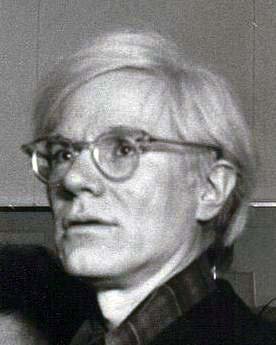
Andy Warhol
“He came back so fast with that painting — it was wet, I didn’t even have time to sit down, and there it was.”
Photo: “Andy Warhol (cropped)”, by Catmuuu, licensed under CC BY 3.0 via Wikimedia Commons.
Unfortunately, the work received negative press shortly after the brief excitement surrounding their fortuitous meeting. Critics framed the collaboration as unequal, portraying Basquiat as being “on a leash” to Warhol. This deeply disappointed Basquiat and led him to distance himself, with no further contact. One can only imagine the frustration of a young artist whose early inspiration, to elevate the underrepresentation of his community in the art world, was met with headlines that reduced him to a figure of bitter irony.
For Basquiat, proving his worth was not just a struggle in life — facing racism — but a constant battle in the art world, where he sought the same power and freedom as anyone else. He knew his passion, value, and purpose, yet the media often spun contrived, cheap narratives that distorted the truth and undermined his spirits at the time.
After Warhol’s death in February 22, 1987, this event further caused Basquiat to distance himself from the outside world.
Sadly, he sank further into addiction and died of a heroin overdose at just 27 years old, in his apartment at 101 Crosby Street, SoHo, Manhattan, on August 12, 1988. Though Basquiat’s life was brief, he left behind a body of work marked by razor-sharp intention, sometimes appearing chaotic, yet always profoundly cohesive.
This is the genius of Jean- Michel Basquiat, that effortless flow to take it all in and get it all down.
Jean-Michel BASQUIAT
His works exude large-scale gestural paintings, raw emotional brushwork, bold often clashing colors, figurative imagery mixed with abstraction and personal socially charged content. Symbolism weaves throughout his work establishing him to be an important cultural icon of the Neo Expressionistic movement.
Basquiat drew from a vast range of influences—art, music, culture, and neo-spirituality. Just as DJs of the time sampled records to build beats, Basquiat sampled moments from life, remixing them into visual rhythms on canvas.
His drive is a defining trait, one that deserves both recognition and inspiration. There’s an unwavering focus to his work, a sense of purpose rooted in the Black community, and a rare ability to stay in flow with the moment.
Where life meets art, and art paints life.
This is not about vision as distance, but about raw contact—direct access and direct documentation. Basquiat confronts race, identity, power dynamics, and systemic racism head-on. A deep dive into his canon reveals an essence that lives within the work itself, allowing us to unpack a genius whose natural flair for color, movement, text, and composition feels complete and whole.
The Work
-
The early Neo- Expressionist work critiques racial identity and systemic oppression. Basquiat depicts a Black figure as a police officer with the word “irony” scrawled nearby, suggesting the paradox of Black individuals forcing systems that oppress their own community. The work uses skeletal imagery and symbolism to challenge assumptions about race and power in American society.
-
Basquiat’s first painting sold, purchased by Debbie Harry of blondie for $200, this canvas shows his transition from street to studio painting. It layers cars, faces, and scrawled text, hinting at themes of Americana, technology, status, and aspiration through Basquiat’s raw, graffiti-infected visual language.
-
Per Capita uses symbolic figures and text to probe economic and social inequality. It juxtaposes ideas of wealth distribution, racial identity, and systemic power structures, marking Basquiat’s early engagement with political and economic critique.
-
One of Basquiat’s most dynamic and celebrated early works, Dustheads portrays two figures in a frenetic, energetic, style that captures psychological intensity and layered states of consciousness. Its chaotic lines and vibrant palette reflect Basquiat’s fearless energy and mastery of gesture,
-
A tribute to jazz saxophonist Charlie Parker (nicknamed “Bird”), this painting interweaves text, crowns, and figures to elevate Parker as a cultural king. Basquiat admired Parker’s improvisational brilliance and saw his legacy as emblematic of black cultural achievement.
-
Often called ‘the skull painting’ this visceral and iconic canvas channels Basquiat’s fascination with anatomy, mortality, and identity. It’s rough expressive lines and bold contrasts make it a signature work of his peak period — and decades later it sold for over 110.5 million by Japanese businessman and art collector Yusaku Maezawa (2017).
-
An emblematic Basquiat painting that combines primal, powerful imagery with his distinctive crown motif. Warrior suggests themes of strength, resilience, and cultural reclamation.
-
This piece incorporates photocopied elements alongside paint and line, showcasing Basquiat’s experimental layering of media. Vivid colors reflect his exploration of identity, mythology, and the heroic figure, bridging his graffiti roots with complex studio practice.
-
A vibrant tribute to jazz greats Charlie Parker and Dizzy Gillespie, Horn players merges Basquiat’s expressive figuration with homage to bebop’s improvisational spirit. The work’s repeated imagery and text evoke the rhythm and jazz vocabulary that deeply influenced his art.
-
This work addresses racial stereotyping and identity in the entertainment industry. Featuring Basquiat and his friend Rammellzee and Toxic as figures, it confronts how African Americans were pigeonholed by Hollywood and popular culture.