Hans Zimmer: Composition, Muse, and the Art of Hybrid Experimentation
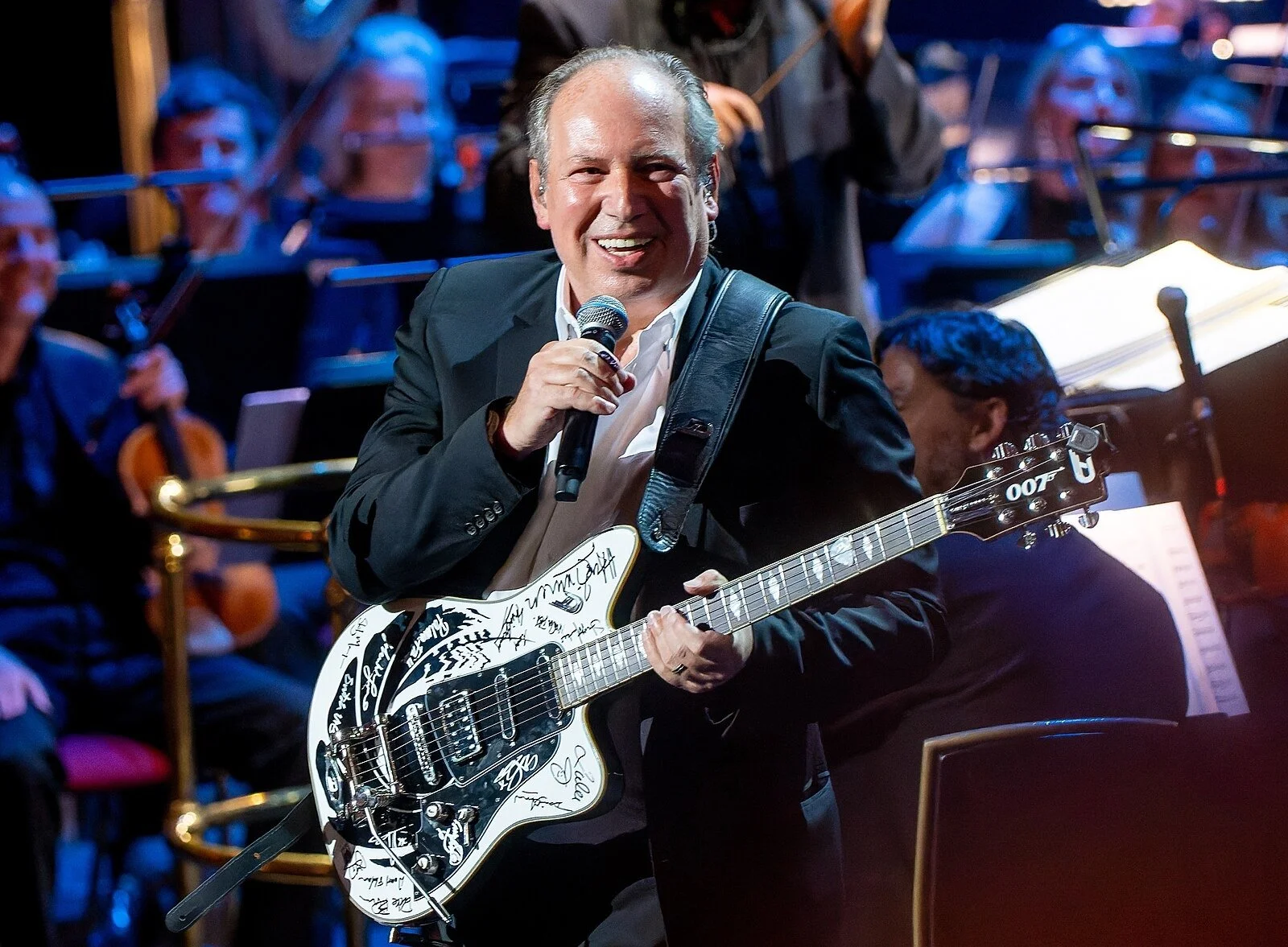
Photo by Raph_PH. Licensed under CC BY 2.0 , https://creativecommons.org/licenses/by/2.0/ (Image has not been changed)
“Video Killed the Radio Star” was written in 1979 by The Buggles - Geoff Downes, Trevor Horn, and Bruce Woolley.
When the song became the first music video broadcast on MTV in the United States on August 1, 1981, it signalled more than a novelty moment. It marked the beginning of an era where sound and image merged into a new kind of storytelling - one that would profoundly shape popular culture and the creative imagination of a generation.
Among this new wave of synthesised sound was a young German keyboardist: Hans Zimmer. At the time, Zimmer was a member of The Buggles. He would later go on to become one of the most influential film composers of modern cinema, earning multiple awards, including Academy Awards for The Lion King (1994) and Dune (2021).
What distinguishes Zimmer is his fearlessness, his willingness to push boundaries in service of emotional truth.
His work consistently privileges intelligence, intuition, and feeling over convention. In Hans Zimmer’s work, the muse is not a distant or romanticised force but an internal signal of raw emotion, memory, or psychological tension demanding expression. It emerges through story, character, and lived experience, guiding the composition from feeling first rather than from form or technique. This is evident across a body of work that includes Interstellar and the social media embraced score ( Interstellar Official Soundtrack | Cornfield Chase), Gladiator, Pirates of the Caribbean (2003), The Da Vinci Code (2006), and The Dark Knight (2008).
Reflecting on The Lion King, Zimmer once said:
“Here I am, sitting in front of this cartoon, and it’s the death of a father, and so I basically wrote a requiem for my dad… I think people notice that it’s written from a deeper place than your normal cartoon.”
While The Lion King was embraced by audiences worldwide, Zimmer’s approach was not universally welcomed within traditional film-scoring circles. Predominantly self-taught and with minimal classical training, he resisted the discipline that defined conservatoire culture. His unconventional background, particularly his limited fluency in reading traditional sheet music, was often viewed with scepticism.
Yet it is precisely this resistance that became his strength. Zimmer’s deep engagement with synthesisers, electronic music, and sound design injected a new language into film scoring - one that resonated viscerally with audiences. His reliance on instinct and playing by ear underscores a rare ability to tell stories through sound rather than notation.
Zimmer’s creative journey demonstrates that there is no single path to greatness. His genius lies not in adherence to tradition but in his ability to sculpt atmosphere, emotion, and narrative through sound - using whatever tools best serve the story.
At the core of his work is a powerful will to express. Discipline remains essential, but its form is shaped by the artist rather than imposed externally. The work emerges from total engagement; whatever is required to tell the truth of the moment.
“If I play you a piece of music, that’s when you can truly look inside me.” Hans Zimmer
While inspired by composers such as Bach, Beethoven, and minimalist Philip Glass, it was Ennio Morricone’s Once Upon a Time in the West that ultimately compelled Zimmer to become a composer.
Blending classical influence with electronic music, world sounds, personal experience, and his early roots in The Buggles, Zimmer constructs emotionally charged sonic landscapes. Like a painter using colour, he uses sound to communicate feeling offering the listener a deeply human connection to the Art.
“You have to remain flexible, and you must be your own critic at all times.” Hans Zimmer
The Process
Zimmer is known for spending extensive time in conversation with directors before writing a single note. He begins not with melody but with developing texture sketches - mood, pulse, and colour. The emotional spine of the story is unpacked first, then refined over time. In this way, the score grows organically from the narrative rather than conforming to pre-existing musical forms.
Principles:
Emotion first, technique later
Hybrid experimentation
Stay with the work long enough for it to reveal itself
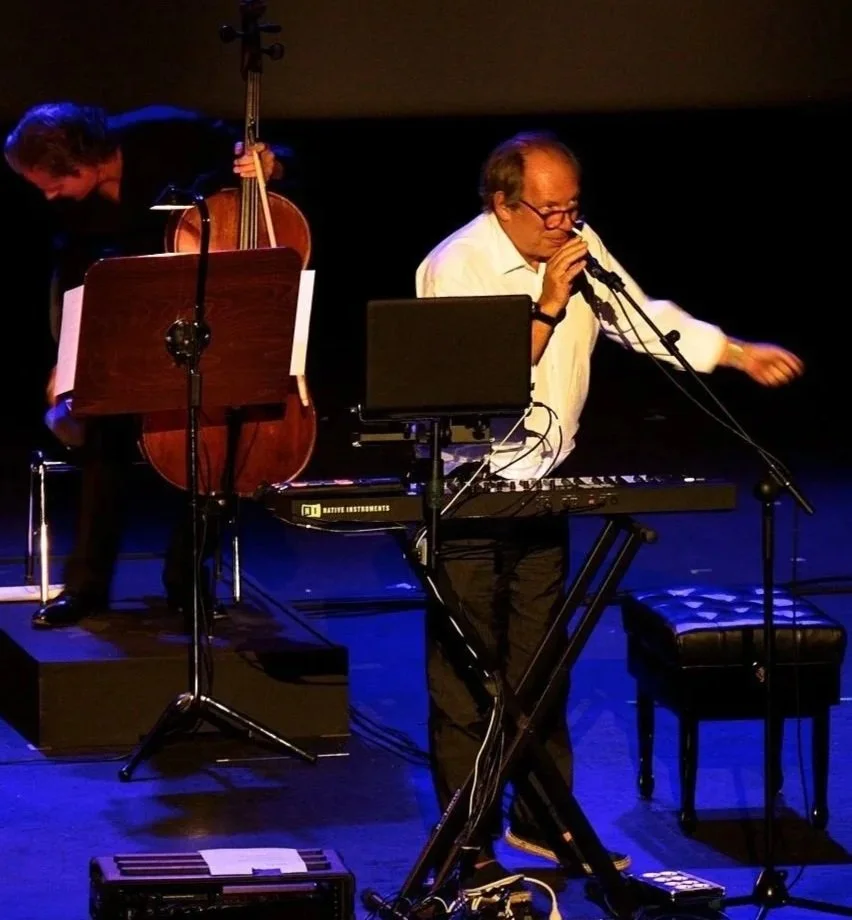
| Image has been cropped to focus on Hans. Attribution: Victor R. Ruiz, Arinaga, Canary Islands, Spain. See license here.
The Work: The Dark Knight
Character
Zimmer sought to express the Joker’s psychology - instability, menace, inevitability - without using traditional melody.
Hybrid Experimentation
He sustained two notes a semitone apart, gradually increasing volume and distortion, refusing resolution. In one instance, he invited a cellist to drag a razor blade along a string; the sound was then digitally processed and layered until tension became physical rather than melodic.
Emotional Intelligence
The result mirrors the Joker’s perpetual threat. Anxiety is engineered directly into the listener’s body, therefore, heightening emotional receptivity.
Takeaway
Zimmer didn’t ask, “What notes should I write?” He asked, “What does unease feel like in the body?”, and then engineered that sensation.
Zimmer is not bound by traditional maps. He is a creative led by emotional flow, and shaping sound to serve the moment. Searching for meaning rather than convention. His work does not merely score films, it invites connection, asking the listener to feel before they understand.
A full bodied investigation.
In doing so, Zimmer reminds us that the most enduring compositions are not written to impress technique, but to reveal an emotional truth the human condition recognises beyond logic.