Kate Bush: the artistic muse
Kate Bush, the enigmatic artist long guided by her own artistic muse, is known for her originality, independence, and a legacy built on deeply imaginative storytelling. Her work reveals that the muse is not a fixed entity, but something fluid, slippery, even chameleon-like — not something to grasp, but something to pass through.
The artist becomes a vessel, giving voice to a kaleidoscope of possibilities only they can decode. And in the end, the work takes on a life of its own.
Bush found solace in songwriting from the age of 11 — an escape into the imaginary landscapes inhabited by her vivid characters. A turning point came when David Gilmour of Pink Floyd funded her first demo tape, a fortuitous moment that set the trajectory for her ascent. By 19, she had topped the UK charts at No.1 with the hauntingly unique Wuthering Heights — a self-written debut that remains iconic.
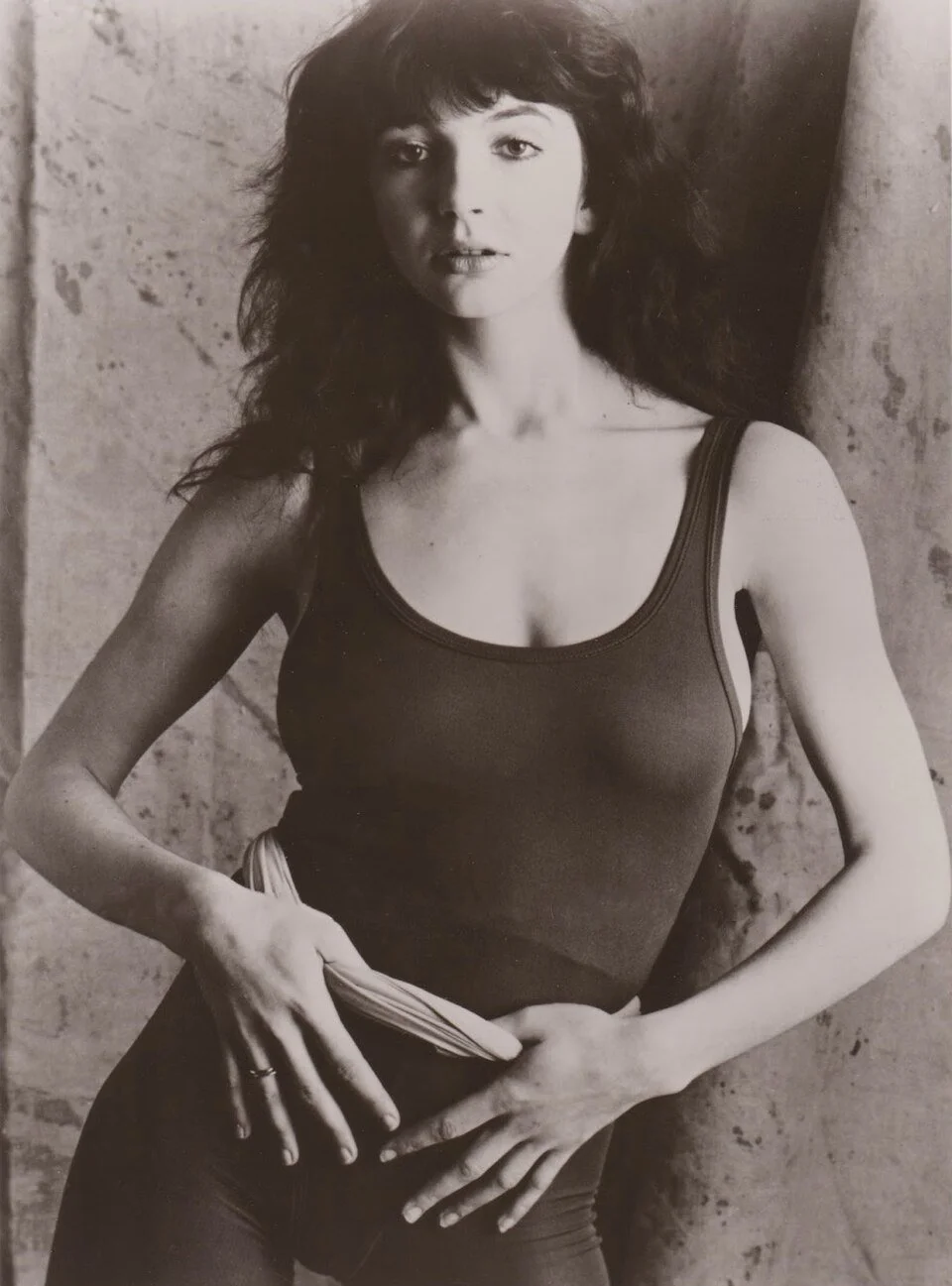
“Writing, film, sculpture, music — it's all make-believe, really.”
Kate Bush, 1978, publicity photo for her album The Kick Inside, distributed by EMI America
With her ethereal voice and visionary mind, Bush made the strategic decision to study interpretive dance with Lindsay Kemp (David Bowie’s teacher) and mime with Adam Darius. This training allowed her to break free from the confines of the piano and physically embody the emotional range of her already vast catalogue. She used movement not just as performance, but as a tool to fully express the complex emotional states and characters within her songs.
Dance and embodied movement were key to the authenticity and channeling of Wuthering Heights. So much so that the vivid, dreamlike imagery of that performance has inspired a global following — culminating in an annual Kate Bush Day, where fans dress in red and recreate her iconic choreography in tribute to Cathy’s ghostly presence.
Bush’s artistry is deeply inspired by a rich tapestry of literature, film, mythology, dance, technology — particularly the Fairlight sampler in the '80s — and psychological exploration.
She opens portals to otherwise unreachable realms, guided by instinct and curiosity. A voracious reader with a fascination for the surreal and symbolic, her songs often blur the boundaries between dreams, memory, and reality. Her music videos — often as experimental and narrative-driven as her lyrics — highlight her cinematic imagination and theatrical flair.
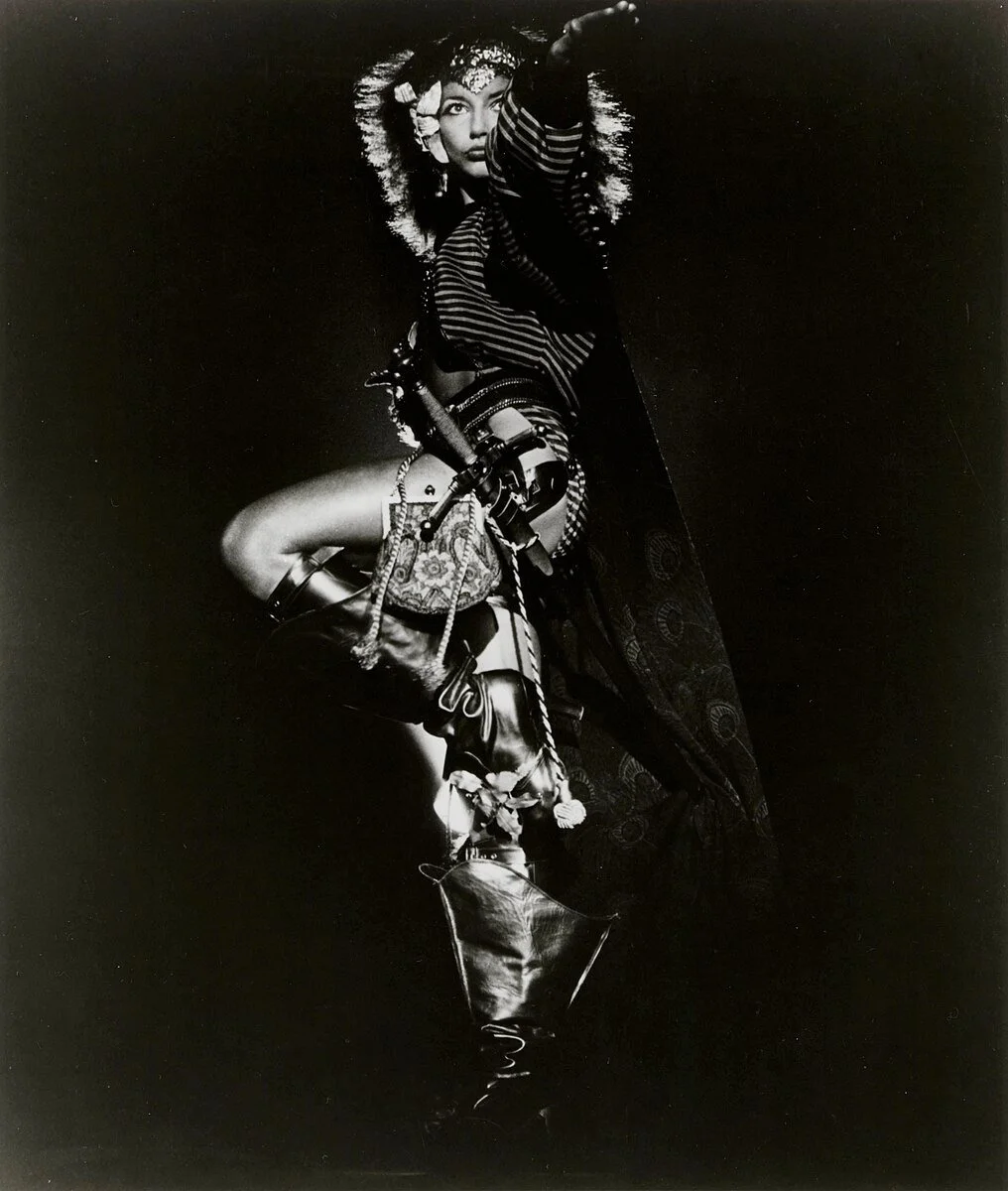
“Some of the best things I’ve written have come from daydreams. You kind of disappear, and the idea arrives, like something catching the wind.”
— Kate Bush
Distributed by EMI America, 1980, Kate Bush dressed as "Babooshka", distributed as a publicity photo for her 1980 album Never For Ever.
For Bush, inspiration becomes a kind of colour palette, one that feeds new stories and sparks creativity not just for herself, but for the collective imagination of her listeners. This eclectic blend of high art, emotional intelligence, and personal vision has helped establish her as one of the most original and influential artists in modern music.
Rather than feed the media machine, Bush chose to retreat, not as a recluse, but as an artist fiercely protective of the sacred space where inspiration dwells. In this, she honours the muse not as a commodity, but as a living force requiring stillness, privacy, and respect.
“I think it’s important that people don’t feel they have to be out there all the time. It’s not a natural situation. It’s not a very creative one. I like my work to do the talking.”
As her own artistic muse, Kate Bush dances to the beat of her own drum, endlessly channeling her fascinations into art that deepens our understanding of the human experience.
In her world, the muse is not a singular voice, but a shapeshifter — flickering between dream and discipline, movement and stillness, imagination and embodiment. She reminds us that the truest art comes not from control, but from surrender — to the voices that whisper through us, waiting to be heard.
What inspires your own creative process?
Is it a blend of deep dives and momentary sparks — or something entirely your own?